


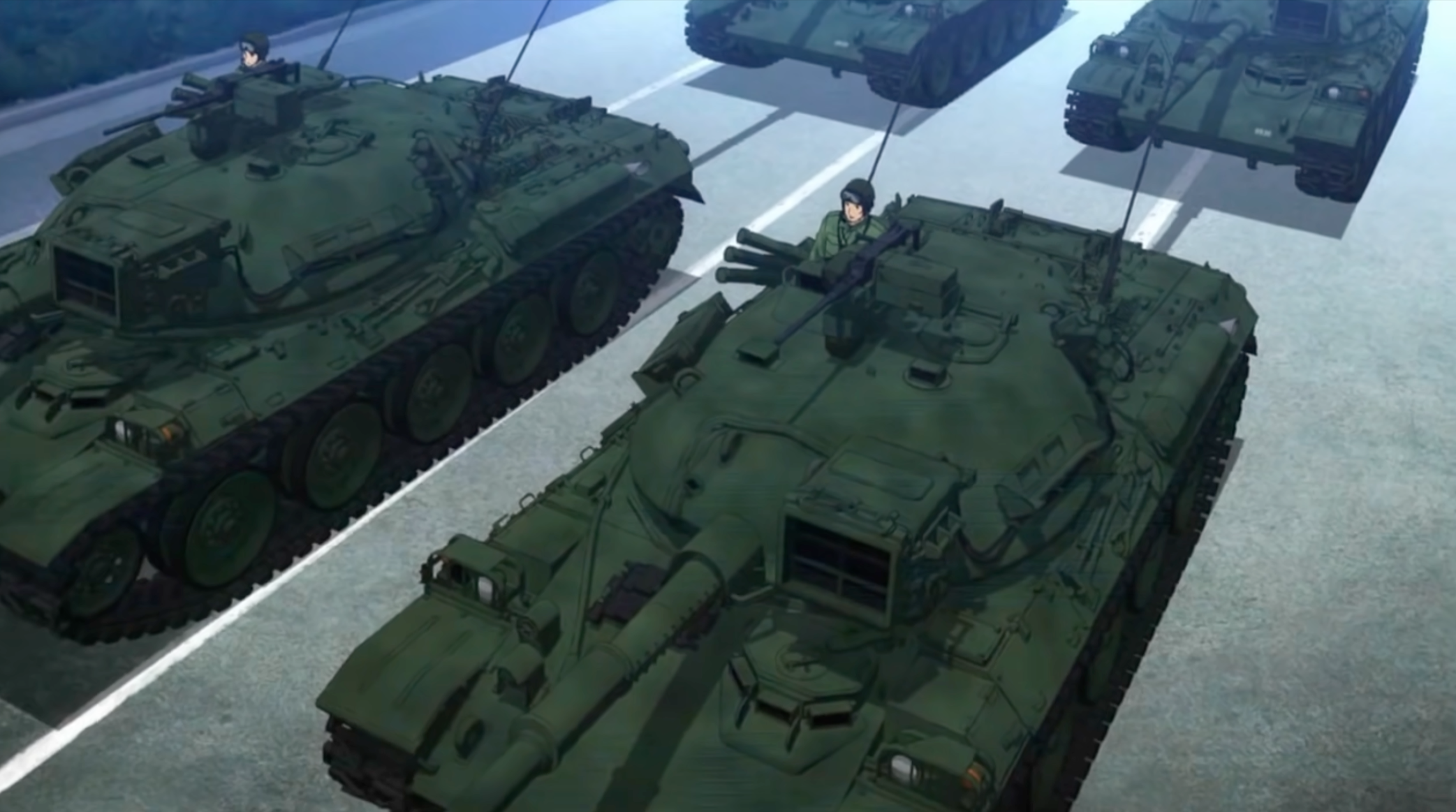
In GATE, the Japan Self-Defense Forces (JSDF) bring modern firepower into a medieval world—and everything looks “easy” until you ask one boring question: how do you keep it fed, fueled, fixed, and lawful day after day? This article treats the JSDF as a real institution operating within Japanese law and formal procedures (not “anime logic”), then stress-tests the story’s most dangerous assumption: a single portal that every truck, pallet, spare part, medic, and mission must pass through. The punchline is brutal: a smart Empire wouldn’t need to win battles. It would only need to break the flow—and let time do the killing. 🧠📦
A Single Portal, A Single Failure: The Geometry of Disaster
Modern logistics is designed around one obsession: avoid single points of failure. The Gate is the opposite. It compresses an entire theater’s lifeline into a single coordinate.
That means the Gate is not “rear area.” It is the theater’s port, railhead, customs crossing, fuel terminal, casualty evacuation corridor, repair backhaul, and replacement pipeline—at the same time.
In doctrine language, it is a forced convergence of every line of communication. In real war, convergence creates a queue. And a queue is a target.
The Empire doesn’t need to destroy the Gate itself. It only needs to reduce the Gate’s throughput below the force’s daily demand. Once inflow < consumption, collapse becomes a calendar event.

Sustainment Isn’t Support: It’s Combat Power in Slow Motion
People talk about firepower. Professionals talk about sustainment because sustainment is what firepower eats.
Think in three clocks: ammunition, fuel, and maintenance. You don’t “run out” in one dramatic moment. You hit thresholds where commanders stop taking risks. Then tempo dies. Then the enemy gets time and space.
The Gate makes those clocks tightly coupled. A disruption in traffic control becomes an ammo delay. An ammo delay forces more cautious tactics. Caution increases patrol duration. Patrol duration increases fuel burn. Fuel burn increases convoy demand. Convoy demand increases traffic. Traffic increases vulnerability. The loop feeds itself.
-
PHASE 1: DISRUPTION – A bottleneck at the Gatehead reduces throughput by even 10-20%.
-
PHASE 2: DEPRIVATION – On-site reserves (Ammo/Fuel) drop below the “Minimum Operational Level.”
-
PHASE 3: FRICTION – Commanders reduce tempo; longer, more cautious patrols increase fuel consumption per mission.
-
PHASE 4: COLLAPSE – Supply inflow fails to meet daily consumption. The mechanized force loses mobility and becomes a static target.
The Legal Reality: A Lawful Force Has Predictable Friction
JSDF is not an improvisational expeditionary company. It is a lawful institution with administrative control, safety regulation, and accountability. That matters because friction is not optional—it is how the organization stays legitimate.
So for this analysis, assume the JSDF follows formal procedures for dangerous goods, custody, and reporting. That makes the system safer. It also means the system cannot “hand-wave” delays away when sabotage, accidents, or corruption appear.
If you want the public legal reference point, the Self-Defense Forces Law is accessible here: Self-Defense Forces Law (Japan).
The Gatehead Throughput Model: How Many Tons per Day Can One Portal Actually Push?
-
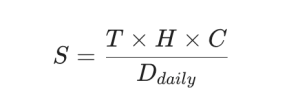
T (Traffic): Convoys per hour (Average 20–30 trucks).
-
H (Hours): Effective operational window (16 hours/day).
-
C (Capacity): Average net tonnage per vehicle (7 tons).
-
Ddaily (Demand): Total daily consumption of the entire force.
Let’s stop arguing with vibes and build a rough throughput model. Not because war is math—because war punishes anyone who refuses to count.
Throughput depends on five bottlenecks: portal geometry, inspection and deconfliction, staging space, outbound road capacity, and security posture.
Start with a conservative convoy reality: if you can move one truck every 2–3 minutes through a controlled choke (including spacing, identification, and safety checks), you’re looking at roughly 20–30 trucks per hour in one direction under “normal” conditions.
If the Gate runs 16 effective hours per day (with pauses for incidents, security alerts, maintenance, and night restrictions), that yields roughly 320–480 outbound trucks per day in the best case. Real conflict pushes you below that because harassment and security procedures consume minutes—and minutes are throughput.
Now payload. A tactical cargo truck might carry 5–10 tons depending on terrain and vehicle type. Use 7 tons as a working average. That produces a best-case daily lift of ~2,200–3,300 tons forward.
That number sounds huge—until you remember what modern war consumes. Also, that lift must cover everything: food, water, medical supplies, fortification material, spare parts, fuel, and ammunition.
And it assumes the road network beyond the Gate can absorb hundreds of trucks per day without constant breakdowns, bridge limits, or ambush-induced stoppages. In an underdeveloped world, that assumption is already fragile.
Scorched Earth as a Logistics Weapon: The Empire’s Smart Playbook
“Scorched earth” is not only burning crops. It is targeted destruction of movement, support, and predictability. The Empire’s goal is simple: force the JSDF to spend more minutes per ton moved.
Move 1: Deny easy resources near the Gate. Strip nearby villages of carts, draft animals, timber, and stored grain. Poison wells. Relocate livestock. The goal is not starvation—it is forcing the JSDF to import basics that should have been local.
Move 2: Break roads without fighting. Ditches, felled trees, rock slides, damaged culverts, undermined embankments, and collapsed bridges are “cheap” for a medieval power and expensive for a mechanized army. Engineers fix it, but engineers require fuel, protection, and spare parts—so repairs also increase traffic demand.
Move 3: Attack the convoy system, not the combat units. You do not need to kill tanks. You need to disable trucks. A single disabled truck can block a narrow road, creating a stoppage that takes recovery assets, security cordons, and time. Time is the commodity you are stealing.
Move 4: Create a permanent gray zone around staging areas. Infiltration, bribery, intimidation of locals, and planted “helpers” force a lawful military to add checkpoints, searches, controlled access, and investigations. Those actions are correct—and they throttle flow.
Move 5: Weaponize accidents. Sabotage that causes “routine mishaps” is strategic gold. A fuel spill becomes a safety stand-down. A warehouse fire triggers an investigation. A forged manifest forces audits. Every audit is a pause. Every pause expands the queue.
Ammunition Reality Check: The Shells Don’t Care About Your Story Arc

Using Q (7,000 rounds) and a gross transport weight (W) of ~60kg per round (including charges and pallets), the daily requirement reaches 420 metric tons—consuming nearly 15-20% of the Gate’s maximum realistic throughput in a single category.
In high-intensity war, ammunition is not “stock.” It is a daily appetite. Recent real-world estimates in Europe have cited Ukraine firing roughly 4,000–7,000 artillery shells per day during intense periods, while Russia fired far more. That is the scale modern artillery warfare can reach.
Here’s the punchline: even wealthy alliances struggle to backfill that consumption quickly. NATO signed contracts for roughly 220,000 rounds of 155mm ammunition with delivery timelines measured in years, not weeks.
Now translate the physics into Gate logic.
A single 155mm shell weighs on the order of tens of kilograms. Even at 45 kg per round as a ballpark figure, 7,000 rounds/day becomes ~315 tons/day in shells alone—before packaging, propellant charges, pallets, handling equipment, and security overhead.
That is already a large fraction of a Gate’s realistic daily lift once you add fuel, food, water, and spare parts.
So an Empire that wants to “win” should aim to force the JSDF into ammunition-hungry solutions: more suppression fires, more “just in case” missions, more area denial. The more the JSDF leans on indirect fire, the more it becomes hostage to Gate throughput.
The Gate doesn’t need to be sealed to defeat the ammo clock. It only needs to be slowed.
Fuel Is the Silent Killer: When Mobility Dies, Everything Dies
Fuel is worse than ammunition because fuel is consumed even when nobody is shooting. Vehicles idle. Generators run. Recovery operations burn extra fuel. Detours multiply kilometers. Security patrols expand. Every “fix” to a scorched-earth problem costs fuel.
Fuel is also fragile. It must be stored safely. It creates fire risk. It requires strict control and documentation. A lawful force cannot treat fuel losses as “shrug and move on.” Each incident can trigger pauses, safety measures, and investigations—again, minutes become the enemy.
A smart Empire attacks fuel confidence rather than fuel volume. If commanders fear shortages, they reduce patrol radius, training, and offensive tempo. That creates ungoverned space. Ungoverned space creates more ambush risk. Ambush risk creates more escorts. Escorts increase fuel burn. The loop closes.
Maintenance Attrition: The Death Spiral Nobody Animates
War breaks machines faster than people expect. Dust eats filters. Mud kills seals. Heat kills batteries. Poor roads kill suspensions. Small-arms fire that doesn’t destroy a vehicle still creates damage that forces repair cycles.
Modern maintenance is layered. Light repairs can be done forward. Deep repairs require specialized tools, calibrated testing, controlled environments, and spare parts pipelines. In a Gate theater, deep repair capacity is anchored to Earth’s industrial base, so everything heavy points back to the Gatehead.
That creates the maintenance death spiral: small damage increases repair backlog; backlog reduces fleet availability; reduced availability increases usage intensity of the remaining vehicles; intensity creates more failures; failures expand backlog again.
The Empire doesn’t need heroic victories. It needs consistent minor damage and constant friction.
Local Procurement Limits: What a Medieval Economy Can’t Substitute
Yes, the JSDF can buy food, hire labor, and source timber or stone. That helps. It can reduce imports of basics and free Gate capacity.
But a medieval economy cannot reliably replace high-grade lubricants, precision bearings, modern batteries, advanced optics, secure communications components, or energetic materials built to modern safety standards.
Local procurement also creates a counterintelligence battlefield. Corruption, coercion, sabotage, and adulterated supplies become realistic threats. A lawful force must inspect, test, document, and sometimes reject supplies. That again costs time and Gate throughput.
Expeditionary Manufacturing: What On-Site Production Can Realistically Save
Now the bonus scenario: transfer manufacturing functions into the Special Region.
Forward manufacturing can be real. Modern defense organizations explicitly discuss additive manufacturing and digital production methods for sustainment. The practical benefit is not “build a tank.” It is “keep the fleet alive longer by avoiding evacuations.”
What it can plausibly do: brackets, mounts, housings, adapters, protective covers, simple mechanical parts within tolerances, jigs and fixtures for repairs, rapid prototyping for field solutions.
What it struggles to replace: high-stress drivetrain parts requiring specialized alloys and heat treatment, long-life precision bearings, optics-grade elements, complex electronics, and above all safe, consistent energetic materials (propellants, primers, fuzes, high explosives) produced under strict hazard controls.
So what is the realistic strategic payoff?
It extends the maintenance clock. It reduces backhaul traffic. It keeps more vehicles and systems operational in low-to-medium intensity operations. It does not erase the fuel clock. It does not solve the artillery-ammunition clock in high-intensity combat.
If you want a sober real-world anchor for how the U.S. frames additive manufacturing in defense logistics, this public strategy document is a strong reference: DoD Additive Manufacturing Strategy.
Designing a Survivable JSDF Posture: How to Not Die to Your Own Queue
If you accept that the Gate is a forced choke point, the winning move is to stop treating the theater like a normal theater.
Dispersion: avoid a single mega-stockpile at the Gatehead. Build multiple smaller caches. Rotate locations. Harden and conceal them. You trade efficiency for survival.
Deception: break patterns. Vary convoy timing. Use decoys. Create false staging areas. A medieval enemy can still observe, but observation becomes noise.
Tempo discipline: scale operations to what sustainment can actually feed. High-intensity, ammunition-heavy campaigns will hit ceilings fast. Intelligence-driven, lower-tempo control operations can last longer.
Security as throughput management: base defense, route security, and counterintelligence are not “support tasks.” They are throughput tasks. If they are under-resourced, the Gate clogs. If they are over-resourced, the force becomes a static garrison. The balance is the war.
The Portal Is the Battlefield
The decisive terrain in GATE is not a hill or a castle. It is the Gatehead schedule.
If the Gate flows smoothly, modern power dominates. If the Gate clogs, modern power becomes a museum piece—expensive, impressive, and strategically irrelevant.
That is why scorched earth is terrifying in a one-portal world. It doesn’t need to defeat JSDF units. It only needs to defeat JSDF flow.
For series information, visit the official anime site.
If you share this piece with a fellow GATE fan, share it with one question: “What happens when the Gate clogs?” That single idea rewires the whole show. ⚙️📦
Technical & Legal Notes for the Strategic Analyst
1. Logistics Load Weight vs. Net Explosive Weight: This analysis uses a conservative estimate of 45kg per 155mm shell (M107 standard). However, in a real-world logistics chain, the “gross transport weight”—including pallets, propellant charges, fuses, and protective packaging—can increase the lift requirement by 30-50% per round. The “Gate Throughput Model” presented here likely underestimates the total tonnage required for high-intensity sustained fire.
2. Legal Friction under the Self-Defense Forces Law: Operationally, the “Special Region” is treated as an extension of Japanese territory under the story’s legal framework. This creates a unique strategic paradox: the JSDF must adhere to domestic Japanese safety standards (such as the Explosives Control Act) even in an alien environment. This “legal friction” prevents the rapid, improvised logistics often seen in expeditionary warfare, making the force more predictable and vulnerable to administrative delays.
3. The Aviation Fuel Clock: The deployment of AH-1S (Cobra) attack helicopters to remote areas like Italica assumes the establishment of Forward Arming and Refueling Points (FARPs). Given the Cobra’s limited loiter time (approx. 2 hours), every hour of combat air patrol necessitates a multi-ton “fuel tail” moving forward from the Gate, further congesting the single line of communication.
Next time you see a dragon getting blasted, don’t cheer for the missiles. Ask yourself: ‘Who paid for that fuel, and how many miles did it travel through the Gate?
©柳内たくみ・アルファポリス/ゲート製作委員会
© Takumi Yanai / AlphaPolis / GATE Project



Author’s Note (Analytical Scope & Assumptions)
Several readers have pointed out that the numerical examples in this article rely on simplified throughput assumptions (vehicles per hour, operating time, average payload). That observation is correct.
The intent of this analysis is not to claim a precise daily tonnage limit for any specific gate configuration, but to highlight a structural vulnerability: once logistics flow is compressed through a small number of controlled access points, even modest delays or procedural friction can push the system into a negative feedback loop.
In practice, gate throughput can vary widely depending on inspection rigor, security posture, command authority, and operating conditions. However, this variance itself is part of the risk. When sustainment depends on a single or tightly coupled set of gates, uncertainty in throughput becomes operationally decisive rather than statistically tolerable.
Likewise, references to high-intensity artillery consumption are intended as upper-bound illustrations, not as a prediction of JSDF fire rates or doctrine. Even at substantially lower expenditure levels, logistics systems can still exhibit non-linear degradation once delay, caution, and increased fuel burn begin to reinforce one another.
Finally, the analysis does not assume an adversary capable of continuous, sophisticated sabotage. The core argument is that modern logistics systems are sufficiently sensitive that even sporadic disruptions—accidents, procedural halts, or temporary inspections—can have cascading effects if redundancy, pre-positioning, and gate dispersion are not deliberately designed in advance.
In short, this article argues for a tendency, not a certainty: without intentional countermeasures, logistics systems under legal, safety, and political constraints naturally drift toward bottleneck-induced exhaustion.
Follow-up on sensitivity and failure thresholds
To clarify where the model is most sensitive: the decisive variable is not absolute tonnage, but time spent inside the gate system.
Small increases in inspection time, queue length, or temporary halts have a disproportionate effect because downstream units respond by reducing tempo, increasing loiter time, and consuming more fuel per mission. This, in turn, feeds additional demand back into the same constrained gate.
In simplified terms, the system fails not when supply drops to zero, but when the average delivery cycle time exceeds the operational planning horizon. At that point, commanders compensate with caution rather than aggression, accelerating the spiral even if nominal supply volumes appear “acceptable” on paper.
This is why improvements that merely increase per-truck payload or nominal throughput often underperform expectations, while measures that reduce uncertainty—redundant gates, pre-positioned stockpiles, and procedural simplification—tend to have outsized stabilizing effects.