


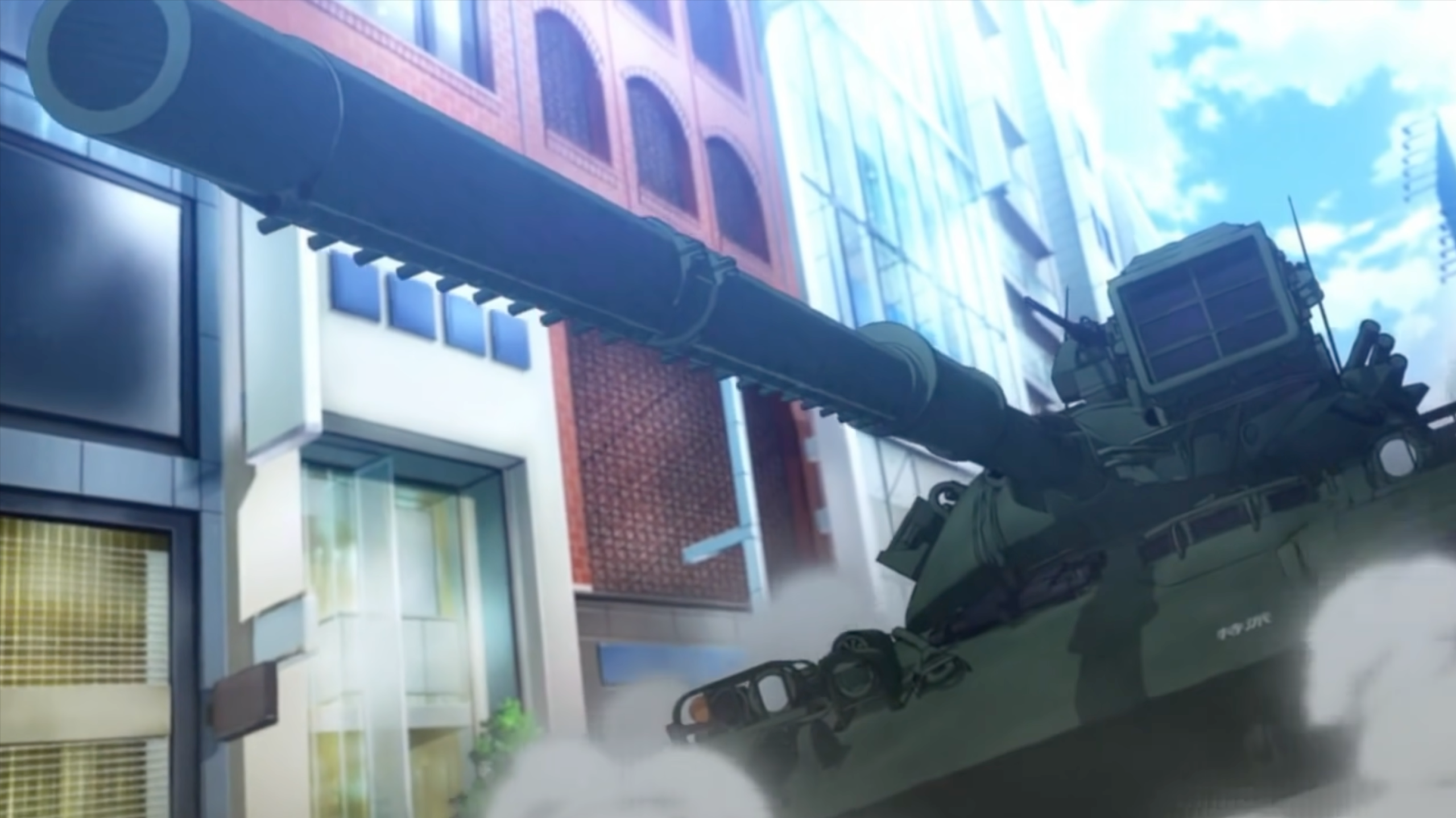
A medieval battlefield has room for dragons, curses, and steel-clad heroes. But drop a modern tank into that world, and fear changes shape. It stops being “Can we slay it?” and becomes “Can we even understand it?”
This column argues something counterintuitive: if you want a tank to function as a terrifying idol—an object that commands dread, loyalty, rumor, and myth—then the older Type 74 can make more sense than the newer Type 10. Not because it is “better,” but because it is more culturally legible as terror, and more operationally believable as a machine that keeps showing up.
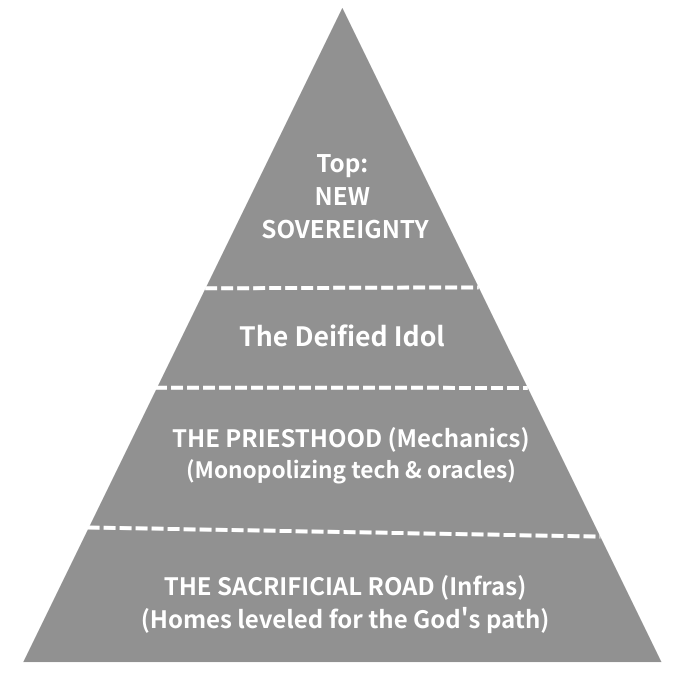
And here’s the part we won’t dodge: keeping an idol alive creates a moral gravity. Roads break. Homes disappear. A priesthood forms around the machine. Sovereignty is maintained through sacrifice—and the people who do the maintaining don’t stay the same.
A Tank as a Terrifying Idol
In fantasy, a dragon is an apex threat with a face. It has moods, patterns, and desires. People bargain with it. Priests write stories about it. Knights dream of earning its head.
A tank does not bargain. It does not posture to intimidate you like a beast. It does not bleed. It does not get tired. That makes it frightening in a colder way.
An “idol” is not merely an enemy. It is an object that reorganizes belief. People start planning their lives around it. They change where they travel. They adjust what they store in barns. They stop sleeping near roads. They begin to whisper that the world has entered a new age, and the old rules no longer apply.
A dragon inspires heroism. A tank inspires logistics. In a medieval world, logistics looks like doom.
The terrifying part is not simply that the tank can kill you. It is that it can return. Again and again. It arrives as if it is a law of nature rather than a decision. When peasants and knights realize that the steel idol reappears after every setback, fear stops being personal and becomes cultural.
That is the pivot. A weapon scares you. An idol disciplines you.
| Feature | Dragon (Apex Predator) | Type 74 Tank (Terrifying Idol) |
| Nature of Threat | Biological Violence (Fire/Claws) | Systemic Despair (Logistics/Physics) |
| Countermeasure | Individual Heroism / Magic Sword | Total Social Demolition / Blockades |
| Rest/Fatigue | Needs Sleep, Hunger, Exhaustion | Immortal as long as parts exist |
| Negotiation | Possible via speech or sacrifice | Impossible. One only “maintains” it |
| Narrative Result | Epic Legend (Fantasy) | The End of Governance (Reality) |
So the best “terrifying idol” is not the most advanced machine on paper. It is the machine that can plausibly keep coming back—on bad roads, with imperfect support, under brutal constraints—until the population internalizes inevitability.
That is where the Type 74 earns its crown.
Why Old Steel Wins in a Medieval World
Modern tanks are systems, not just vehicles. They assume a world of paved roads, heavy transporters, predictable fuel flows, trained technicians, and diagnostic routines. They assume a supply chain that can breathe.
A medieval world suffocates systems. It loves simple brutality. It punishes clever dependency.
Even before combat, a tank fights the terrain like a second enemy. It fights the bridge built for carts. It fights the muddy slope that does not care about horsepower. It fights the village gate that becomes a steel trap once the road narrows. It fights the human factor—teams who have never seen precision tolerances, never learned that “close enough” becomes “broken” at speed.
Here’s the ugly truth that makes the “older platform” argument land: in a medieval setting, the “best” tank is the one that can be kept alive with the least exotic support. It is the one that tolerates rough handling, uneven infrastructure, and low-tech improvisation without collapsing into a silent monument.
That doesn’t turn the Type 74 into a miracle. It turns it into something more valuable for this particular kind of story: a machine that is believable as a recurring nightmare.
The Type 10 can absolutely be terrifying. But it is also easier to “break the spell” of terror if it becomes rare, support-hungry, or constantly sidelined by non-combat problems. Intermittent fear is manageable. People adapt. They plan. They resist.
An idol needs stage time. Old steel tends to get it.
The Type 74’s “Kneeling” Body and the Science of Dread
If a tank is going to be mythic to medieval eyes, it needs body language.
The Type 74 has one.
Its hydropneumatic suspension allows posture changes. That sounds like a technical footnote. To medieval minds, it reads as blasphemy.
A castle does not kneel. A wagon does not bow. A warhorse kneels because it is alive and trained.
Now put yourself on the ground. The steel idol rolls in—low, squat, unromantic at first. Then it lowers itself further, as if sinking into the earth. Or it lifts slightly, like a predator choosing an angle. Or it leans, subtly, as if it has joints and intent.
That posture change does two psychological jobs at once.
First, it breaks the category “machine.” The tank begins to behave like a creature. Not a dragon—something worse. A creature with no eyes and no breath, yet it moves with purpose.
Second, it creates ritual. Medieval fear thrives on ritual. A dragon’s shadow means “it hunts.” A church bell means “it warns.” A tank that kneels means “it prepares.”
Engineers can explain it as terrain adaptation and angle management. The medieval witness will not care. They will file the posture under sorcery, divine punishment, or a new kind of demon. Either way, dread deepens.
And it has a practical side that also amplifies fear. By altering silhouette, the tank becomes harder to “read.” Medieval fighters are trained on shapes. Where is the chest? Where is the neck? Where does the body fold? A tank that shifts outline makes even futile attacks feel more humiliating. It looks like the idol is refusing you.
Fear loves refusal.
Sound, Heat, and Ground-Shake: Fear You Can Measure
Dragons announce themselves with roar and wingbeat. Tanks announce themselves with physics.
The sound of a tank is not a scream. It is a long, heavy insistence. It grows, holds, and stays. The rumble travels through soil and timber. People feel it in their teeth before they see it.
That matters because medieval fear is communal. It spreads village to village. It rides on witnesses. If the sound arrives first, it synchronizes imagination. An entire community begins to picture the same doom at once.
Then comes heat.
In fantasy, heat means fire magic—dramatic, visible, directional. You see the flame, you dodge the flame, you pray.
A tank’s heat is wrong. It leaks. It stains the air. It radiates from a shape that does not glow like a forge. It is a sun trapped under armor. On a cold morning, shimmering air becomes proof that the idol is boiling the world.
Finally, there is ground-shake.
Medieval armies understand stampede. They understand cavalry charge. But a tank’s vibration is not hooves. It is continuous pressure. The earth doesn’t “hit” so much as it “compresses.” Palisades creak. Loose stones shift. The ground becomes a drum.
Put these together and you get a fear cocktail that is almost unfair.
A dragon frightens you by threatening your body. A tank frightens you by threatening your world’s stability.
That is how an idol forms: not only through death, but through the sense that matter itself has changed sides.
Logistics Is the Real Battlefield
Now we step into the part that makes the argument irreversible: the road war.
A tank does not arrive by willpower. It arrives by a chain. Break the chain, and the idol stops being inevitable.
In a medieval world, the chain breaks in three obvious places:
Fuel. Bridges. Maintenance.
Fuel isn’t “some liquid.” It is an entire industrial story. Even if a portal supplies it, distribution is the villain. Barrels are heavy. Spillage is loss. Theft is temptation. Fire is terror. Every mile is a question.
Bridges are the sharpest choke point. Medieval bridges vary wildly in strength and width. Approaches are weak. Guard posts and toll gates are built into them. A tank forces choices: detour, reinforce, ford, or stop. Each choice consumes time and attention.
Maintenance is the quiet killer. Tanks are violence machines made of tolerances. Tracks wear. Road wheels suffer. Filters clog. Seals age. Fluids leak. Bolts loosen. None of it is cinematic, yet it is destiny.
So why does the Type 74 help?
Because it occupies a middle ground that is brutally useful in narrative logic. It is advanced enough to feel impossible, yet “simple” enough in system dependency to be sustained by a small modern detachment operating in hostile conditions.
That detachment becomes part of the story. They are not wizards, yet they do wizard-like work. They carry tools like holy relics. They interpret the idol’s needs. They perform rituals of tightening, bleeding, adjusting. The medieval audience does not need to understand them. They only need to watch the idol be reborn.
Every successful repair becomes doctrine. Every return becomes prophecy.
And here is the attrition insight: the longer the campaign runs, the more the war becomes a contest of who can keep a machine alive, not who can swing a sword hardest.
That is not just realism. It is the fastest path to awe.
The People Who Keep It Alive Become the Horror
This is the part most “modern weapon in fantasy” stories flinch away from, because it makes the world morally expensive.
The cruelest twist isn’t the tank. It’s the humans who keep it alive.
In a medieval world, maintenance is not “support.” It is mystery. The crew that tightens bolts, bleeds lines, and replaces worn parts becomes a caste. Villagers don’t see torque values or fluid levels. They see strangers who approach the iron idol without fear—and make it wake up again.
That’s how technicians become priests.
At first it’s practical. Guards keep locals away because curious hands get crushed and theft happens. Then it becomes tradition. A cordon becomes a ritual boundary. A tool roll becomes a sacred kit. A rag used to wipe oil becomes a relic. The word “maintenance” disappears, replaced by a myth: healing.
And the healers change.
Not because they are villains, but because everyone around them demands a story. When people kneel to you, your identity starts to rearrange itself. You begin to speak in absolutes. You begin to believe ordinary hands are unworthy near holy steel. You begin to treat the idol’s continued existence as proof that you are chosen.
It doesn’t take propaganda. It takes repetition.
Every day you hold the line against entropy—mud, rust, fatigue, fear—and every day the medieval world applauds you as if you defeated death itself. Eventually, the technicians stop being soldiers who maintain a machine. They become an order that maintains reality.
The Workflow: From Maintenance to Religion
-
Failure: The idol falls silent. The god is “wounded.”
-
Ritual: The Priesthood (Mechanics) performs “Secret Rites” (Wrenches and Oil).
-
Resurrection: The iron god kneels, roars, and walks again.
-
Doctrine: No one asks how it works; they only offer “Tributes” (Fuel and Obedience) to keep it awake.
Orders always want permanence. Permanence demands control.
So the priesthood starts writing rules. Who may approach. Who may watch. Who may speak of the idol’s wounds. Who may touch the road it will take. Who may live near the supply line. Who must relocate. Who must pay.
This is where the terrifying idol stops being an object and becomes a regime.
And regimes do not survive on metal alone. They survive on hierarchy, secrecy, and moral permission.
When “Best” Becomes Too Heavy to Keep Alive
A modern platform often wins by being embedded in a modern ecosystem. When the ecosystem collapses, the platform can lose its teeth in ways that look absurd to outsiders, but are painfully real to anyone who has watched complex machines fail.
Small failures stack.
A fault forces a fallback. Fallback increases workload. Workload increases mistakes. Mistakes cause damage. Damage increases repair time. Repair time increases exposure. Exposure increases losses. Losses break morale.
That cascade is not limited to combat. Even “moving the tank” becomes a strategic decision when roads narrow, bridges threaten collapse, and every detour means more fuel and more wear. In a medieval world, the land itself becomes a defensive system.
So the irony emerges: a tank designed to be the sharpest spear can be forced into being a slow, expensive liability if the supporting environment cannot keep pace.
An idol does not need to be perfect. It needs to be present.
If the Type 10’s support needs reduce its presence—through transport bottlenecks, maintenance overload, or scarcity of specialized parts—then dread becomes intermittent. Intermittent dread is survivable. People rationalize it. They gamble. They resist.
If the Type 74 keeps appearing, battered but functioning, resistance turns into superstition. Superstition turns into panic. Panic turns into surrender.
That is the difference between a scary weapon and a terrifying idol.
Type 10 as a System, Not a Lone Machine
It matters to respect what the Type 10 represents. It is a modern statement. It is doctrine embodied: modular thinking, information sharing, system-level coordination. It is not merely a tank. It is a node.
In a medieval world, nodes are lonely.
Communication is slow. Roads are unreliable. Maps lie. Weather wins. Orders arrive late. The idea of a “networked battlefield” collapses into shouting distance and signal flags.
So some of the Type 10’s strongest advantages risk becoming invisible or underused. That doesn’t make it weak. It makes it narratively inefficient for an “idol” story, because an idol story is about public certainty. The crowd needs to witness continuity. They need to see the steel god keep moving.
Meanwhile, higher complexity can increase the perceived cost of downtime. Every hour spent troubleshooting becomes a story problem. Why is the idol silent? Why did the god stop walking? Why is the miracle stuck in mud?
If you want inevitability, you want a platform whose operational story isn’t constantly interrupted by dependency drama.
The Type 74’s aura is easier to maintain. It can be framed as rugged, repeatable terror that does not demand that the medieval world become modern overnight.
And that’s the hidden trap of “latest tech” in medieval conditions: the more your machine requires modern society, the more your story becomes about rebuilding society. That can be brilliant. It is simply a different genre.
If your genre is “chivalry meets industrial inevitability,” the Type 74 fits like a curse.
The Dragon Problem: Living Threat vs Industrial Threat
Now we can say it plainly.
A dragon is living terror. Its fear is personal. It can be tricked, lured, bargained with, starved, wounded, slain. Even if success is unlikely, the verb exists.
A tank is industrial terror. Its fear is systemic. You can ambush it, but you cannot negotiate with it. You can damage it, but it can return. You can kill its crew, but more crews can arrive. You can burn a village, but the factory—or the portal—might be elsewhere.
To medieval psychology, that is a different kind of hopelessness.
Dragons break bodies. Industrial terror breaks meaning.
A knight’s identity relies on the belief that courage changes fate. A tank erases that belief mechanically. It does not care about your story.
That is why the Type 74’s “body language” matters so much. The kneeling posture, the low silhouette, the unblinking movement—these cues translate mechanical indifference into demonic intention.
They will not say, “It has hydropneumatic suspension.” They will say, “It bows to the earth, then strikes.”
And the myth spreads faster because it is easy to retell.
The Cost of Making a Road for a God
Now we stop pretending terror is only about the battlefield.
A tank doesn’t just move through a medieval landscape. It edits it.
Stone roads that survived centuries crack under repeated weight and vibration. Narrow streets become traps, so walls come down—not because the tank enjoys cruelty, but because the road must widen. A house becomes “an obstacle,” a courtyard becomes “a turning radius,” a shrine becomes “line-of-sight.”
The language is the first violence.
Once you call a home a “strategic obstruction,” you have already left the medieval moral universe. The villagers don’t hear necessity. They hear desecration. They watch heirloom stones become rubble and learn the real meaning of sovereignty: someone’s future is always the price of keeping order.
And here’s the darker truth: the more the tank becomes an idol, the more sacrifices become non-negotiable.
An ordinary army negotiates with towns. It pays, it promises, it bargains. An idol does not bargain. An idol demands.
So the road widens. The bridge is reinforced with whatever timber can be taken. The fields are trampled because detours are expensive. The priesthood does not call it theft. They call it offering.
That is how fear becomes infrastructure: not a moment of battle, but a continuous project that converts lives into mobility.
If a dragon burns a village, it’s a tragedy. If the idol flattens a village to keep moving, it becomes policy.
And policy is harder to hate, because policy claims to be rational.
So yes—sovereignty is maintained through sacrifice. And the people sacrificed are rarely the people who get to name the sacrifice.
The Moment a Road Becomes a Weapon
Here is the scene that sells the entire logic.
The tank is not defeated by a dragon. It is delayed by a road.
A bridge approach collapses. The tank halts. The column behind it compresses. Carts, horses, and frightened villagers clog the route. The medieval defenders do not need to pierce armor. They only need to jam time.
Time is the most lethal weapon against complex machines in hostile environments.
Every extra hour burns fuel and patience. Every extra mile eats track life. Every repair risks a mistake. Every delay invites attacks that are less about penetration and more about panic.
This is where the Type 74 shines as the “perfect idol” in a grim way. It is heavy enough to be unstoppable in direct contact, yet also a platform whose presence can be sustained without turning the campaign into a fragile high-tech ballet.
In other words, it can survive the road war.
Once it survives the road war, the psychological war is over.
Medieval people will not remember every shot. They will remember that the steel god arrived despite the mud. They will remember that it waited in silence, then moved again. They will remember that roads and bridges seemed to change their meaning around it.
That is how weapons become saints and demons.
When the Idol Runs Dry and Still Rules
Now for the extreme case—the point where a weapon becomes pure sovereignty.
The idol runs dry. No fuel. No shells. No movement. A dead tank is just a metal box—unless the regime around it keeps the divinity alive.
So what happens?
First, the priesthood changes the meaning of “power.”
If the tank cannot move, they declare movement was never the point. The point was presence. The idol becomes a fortress, a shrine, a court. Earthworks rise around it. Banners hang from its hull. Lamps burn at night so the silhouette never disappears. The immobile tank becomes the center of a protected zone where laws are different.
Second, they weaponize access.
The tank is no longer a weapon; it becomes a pilgrimage object. Only the faithful may approach. Only the loyal may look inside. The machine’s silence becomes sacred. Repairs become hidden rites behind screens. The less people understand, the more they can believe.
Third, they turn maintenance into a public theology of mercy.
When parts are scarce, every visible “revival” matters. A turret traverses by hand? A miracle. A radio crackles? A prophecy. A track link replaced? Healing. The priesthood doesn’t need the tank to fire. They need it to change state in public—just enough to prove that the god still breathes.
Fourth, they externalize failure.
Fuel shortage isn’t logistical collapse. It is heresy. Sabotage. Impurity. The blame migrates outward—to rival lords, to unbelieving villagers, to “corrupt roads,” to the moral weakness of the world. Once failure becomes sin, the priesthood can punish without admitting vulnerability.
Finally, they keep a threat alive that doesn’t require ammunition: inevitability.
Even empty, the tank’s armor is a statement medieval weapons cannot answer. It can still dominate space. It can still be the place where judgments happen. Rumor persists that the idol will “walk again” when offerings return.
A dragon’s terror ends when it sleeps. An idol’s terror deepens when it stops—because now the entire society is mobilized to make it wake.
In that moment, the tank is no longer a battlefield asset. It is a sovereign myth with a maintenance budget.
And that is the bleakest reason the Type 74 works so well as a terrifying idol: it doesn’t need to be the newest machine. It only needs to be the machine a priesthood can keep sacred, even when it becomes useless as a weapon.
The Kind of Power That Turns into Myth
At this point, “older can be scarier” should feel less like a gimmick and more like a diagnosis.
The Type 74 is terrifying not because it is the most modern machine, but because it is the most myth-compatible machine. It can kneel. It can loom low. It can keep returning. It can be serviced by a small circle of modern hands without demanding that the medieval world become modern overnight.
It also has a visual honesty that helps. It looks like a tank in the classic sense: a slab of steel, a turret, a gun, a crawling beast. Medieval minds can name it. Naming is the first step toward building a religion around fear.
The Type 10 looks like a modern system. It speaks a design language that is almost too alien. That can be cool, but it can also distance dread. People fear what they can describe to each other in taverns.
In the end, a terrifying idol is a story about permanence.
The most frightening thing is not that the idol can kill you today. It is that it suggests the world you knew is already gone.
So if your goal is to make a medieval audience feel dread deeper than dragonfire, the Type 74 is a perfect choice. Not the sharpest spear. The heaviest prophecy.
If you’re writing this world, don’t only ask what the tank destroys. Ask what it forces people to become. That’s where armor turns into attrition, and a machine turns into a god.
If you’re building a world where steel meets chivalry, don’t only ask which tank hits harder. Ask which tank keeps arriving when roads fail, spares run thin, and fear begins to organize society. That’s where the Type 74 stops being “old” and becomes an idol—one that kneels, rises, and keeps walking like the future has already won.
The Tagline
“Welcome the Kneeling God. In exchange, surrender your roads, your homes, and the ancient lie that courage can still change the shape of fate.”
The Afterword: To the Keepers of the Sovereign Myth
If you have finished this column, you can no longer return to the simple comfort of a fantasy world. You haven’t just discovered a way to kill dragons; you have discovered a way to overwrite a civilization with the cold, efficient ink of industrial inevitability.
To turn the Type 74 into an idol is not an act of victory. It is a slow, methodical suicide of the soul. It is the process of allowing your Empire to be swallowed whole by the belly of a modern machine, while desperately maintaining the appearance of being the one in control.
True sovereignty in this new age is no longer found in a crown or a sword. It is found in the madness required to keep a straight face while calling a cracked road a “holy path” and a leaking gasket a “sacred wound.”
The machine does not care if you believe in it. But the regime depends on making everyone else believe.
The question is no longer whether the tank can survive your world. The question is whether you can survive the kind of person you must become to keep it alive.
Would you like me to draft a “Post-Faith Scenario” where the Empire attempts to reverse-engineer a single track link, only to realize that their entire magical and metallurgical understanding is a thousand years too late? We can dissect the moment the “Priesthood” realizes their God is made of math they will never master. Shall we go there?
©柳内たくみ・アルファポリス/ゲート製作委員会
© Takumi Yanai / AlphaPolis / GATE Project




A quick framing note:
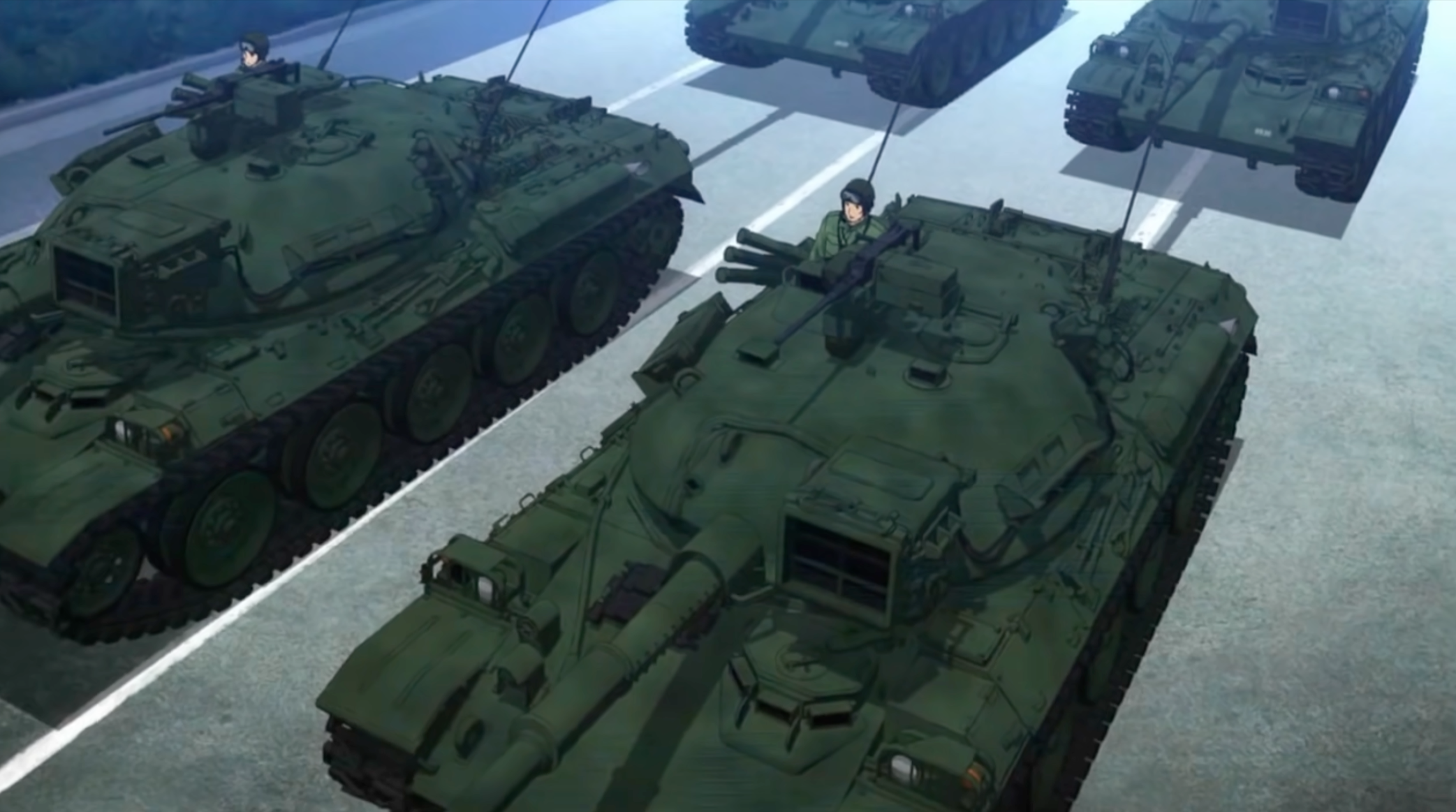
This piece is a fiction-first analysis of how a modern tank could become a “terrifying idol” inside a medieval world. It’s not written as real-world operational guidance. Where I reference the Type 74 / Type 10, I’m leaning on publicly available information for the historical baseline, then switching into an explicit thought experiment: “What happens to belief, infrastructure, and governance when an industrial machine becomes the center of sovereignty?”
I’m also drawing a hard line on details that would be actionable for real-world harm. I’m not interested in teaching tactics; I’m interested in the political theology of maintenance—how logistics becomes regime, how the language of necessity becomes violence, and how “keeping it alive” changes the people tasked with doing it.
Assumptions (to keep the discussion honest):
Logistics: Fuel and spares exist in some capacity (portal/stockpile), but distribution remains the primary strategic bottleneck.
Focus: The analysis centers on ground-level social and psychological pressure, not modern combined-arms dominance.
Attrition: The point is the idolization of power and the cost of attrition, not simple “power-scaling” debates.
What I’m deliberately not covering here (yet): Air power, drones/ISR, electronic warfare, and the full mechanics of occupation governance (taxation, legal systems). Those deserve their own dedicated pieces.
If you spot factual errors in terminology or historical specs, please call them out—sources are appreciated. And if you’d like to see a sequel, let me know which direction interests you most:
A “Post-Faith Scenario”: The fallout of failed reverse-engineering.
The Priesthood’s Internal Schism: When the maintainers become the real power.
The Civilian Perspective: A town’s slow death as it is converted into a “Holy Road.”
The idol is silent for now. Whether it wakes again depends on how much more reality you are willing to sacrifice in the comments below.
One brutal detail I intentionally left out for now is Economic Attrition. If the tank is a God, its “blood” (fuel and specialized maintenance) is astronomically expensive. There will come a moment when the Empire realizes it can no longer buy peace with silver, but only with the very resources that sustain the machine.
I’m thinking about exploring this next: How a sovereign state becomes a beggar to its own weapon, and how the “God” eventually eats the Empire’s treasury before it ever fires a shot in the next war. Does this economic death-spiral interest you as a sequel?