


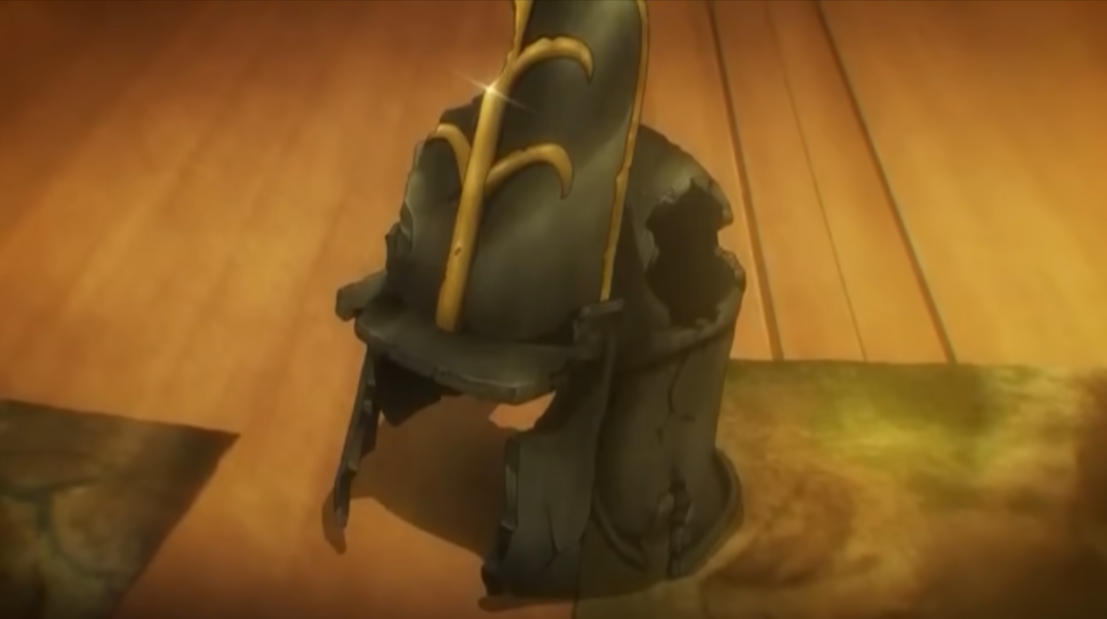
Magic can be argued with. It has intent, a story, and usually a moral ledger. You can bargain with a spell, condemn a curse, or beg a god to intervene. Even panic can be negotiated, because panic has an author.
Indirect fire has no author you can face. In GATE, the JSDF does not merely introduce larger blasts. It introduces violence that refuses to participate in meaning. The target cannot see the source. The priest cannot narrate it cleanly. The knight cannot duel it. The body still remembers it anyway.
This is not a weapon-stats piece. It is an analysis of suppression as theft: theft of decision-making, theft of virtue, theft of legitimacy, and theft of social trust. The first barrage is not only a tactical shock. It is a cultural rupture, with medical and political bills that keep arriving long after smoke fades. 😶🌫️
Part 1: Suppression Isn’t Fear—It’s Theft
A medieval military culture can absorb terror if terror stays legible. “Legible” does not mean fair. It means suffering can be placed inside a shared grammar: intent, blame, ritual response, punishment, atonement, revenge, prayer. Even a curse fits. Even a miracle fits. The event still has a seat at the table of meaning.
Indirect fire breaks that grammar by design. On a gun line, it is procedure: survey, grids, timing, logistics, fire discipline, correction, repeat. On the receiving end, it arrives as an event without negotiation. The shell does not threaten, does not demand, does not offer terms. It lands. It fragments. It leaves broken bodies and broken plans.
The key damage is not only physical. It is semantic. Medieval armies are engines of meaning as much as engines of force. They rely on visible virtue: banners, horns, elite bodies in armor, leaders present as proof, courage displayed as currency. A soldier can be judged inside that world. A soldier can be praised or condemned inside that world. The culture can metabolize loss, because loss is still “about” something.
Suppression steals “about.” Under accurate indirect fire, personal virtue fails to purchase outcomes. Loyalty can lead to clustering. Clustering boosts casualty density. Charisma draws eyes. Eyes guide destruction. Discipline produces predictable patterns. Patterns invite repeated strikes. The qualities a medieval culture calls “good” become sensors for a system that punishes predictability.
This is not merely fear. Fear can still be heroic. Fear can still be moralized. Suppression is forced helplessness. It takes initiative away, then forces the victim to live inside the consequences. A fighter can be brave and still be pinned. A commander can be brilliant and still be denied movement. A unit can “hold” and still be erased in fragments.
Modern militaries value artillery for overlapping effects: kill, wound, break cover, degrade movement, and dominate choice. The decisive item is not spectacle. It is decision denial. The barrage does not require perfect lethality. It requires only that the target believes motion equals death. That belief can lock an army into place.
In GATE, that is the hidden weapon. Fire support does not merely destroy bodies. It destroys the assumption that “virtue produces outcomes.” Once that assumption dies, discipline, obedience, faith, and politics start to rot from the same wound.
Some readers treat this as a simple power gap: rifles beat spears, radios beat messengers. That misses the deeper injury. The Empire does not only lose battles. It loses the category of “battle” as a meaningful exchange. A duel is a conversation. A melee is a conversation. Indirect fire is a deletion.
Deletion creates a specific dread: the dread of being reduced to a dot. A dot has no biography. A dot has no virtue. A dot has no plea. A dot disappears. In a world built on honor, that reduction is not merely death. It is erasure of personhood.
The Empire can adapt tactically. It can spread out, dig, move at night, deny observers. Yet the first encounter still rewrites the moral economy. The soldier learns a new rule: survival is not proof of righteousness, and death is not proof of sin. Survival is spacing, timing, luck, and systems. That lesson is the theft.
Part 2: The Sky Stops Answering Back
A medieval worldview does not require scientific certainty. It requires narrative certainty. People need a “because.” If the cause is hidden, societies manufacture one. That is not stupidity. It is stabilization. A coherent story limits panic and preserves coordination.
Indirect fire attacks stabilization by combining conditions the human brain hates: unpredictability, helplessness, and repetition. The target cannot see the source. The target cannot negotiate with the mechanism. The target cannot reliably say, “This happened due to my deed,” or “This happened due to a rival’s spell,” or “This happened due to a duel lost.” The moral ledger cannot balance.
This creates the first split that matters in GATE. The JSDF experiences indirect fire as controlled power. The Empire experiences it as an unanswerable event. The same shells produce opposite emotions because the rules are asymmetrically distributed. One side holds the table of geometry. The other side receives only the invoice.
On the receiving end, the most corrosive detail is not the blast. It is the silence of agency. There is no enemy line to shout at. There is no visible mage to assassinate. There is no shrine you can defend to “restore favor.” The sky no longer replies in the familiar language of omens and bargains.
Societies under illegible harm tend to restore authorship by force. They give the event a face so it can be confronted. That face may be real, symbolic, or fabricated. A minority becomes suspect. A rival noble house becomes “traitor.” A cult becomes “cause.” A general becomes scapegoat. A priest becomes heretic. The goal is not truth. The goal is control of meaning.
That reflex is not a side note. It is a predictable political move. Authority can only govern inside stories it can tell. If it cannot stop the event, it tries to frame the event. If it cannot frame the event, it punishes a proxy to show motion.
Indirect fire also breaks a second stabilizer: reciprocity. Pre-modern violence is often reciprocal in form. A raid invites a raid. A siege invites a siege. An insult invites a challenge. Even terror retains a mirror. Indirect fire removes the mirror. The Empire cannot “send the same thing back.” That asymmetry breeds a special rage: rage without a reachable target.
Rage without target tends to turn inward. It hunts internal enemies. It searches for purity tests. It chases conspiracies. That pattern has appeared across centuries in real societies under stress. The details change; the mechanism persists: cognitive closure via punishment.
So the psychological shock is not only “this is strong.” It is “this breaks the rules of meaning.” People can live under tyranny if tyranny is legible. People can live under curses if curses have authors. People struggle under a system that looks like nature itself became an accomplice.
At that point, fear loses its conversation partner. You cannot bargain with math. You cannot bribe trajectory. You cannot shame the fuse. In a culture built on negotiation with fate, that absence is catastrophic.
Part 3: The Hyperinflation of Courage
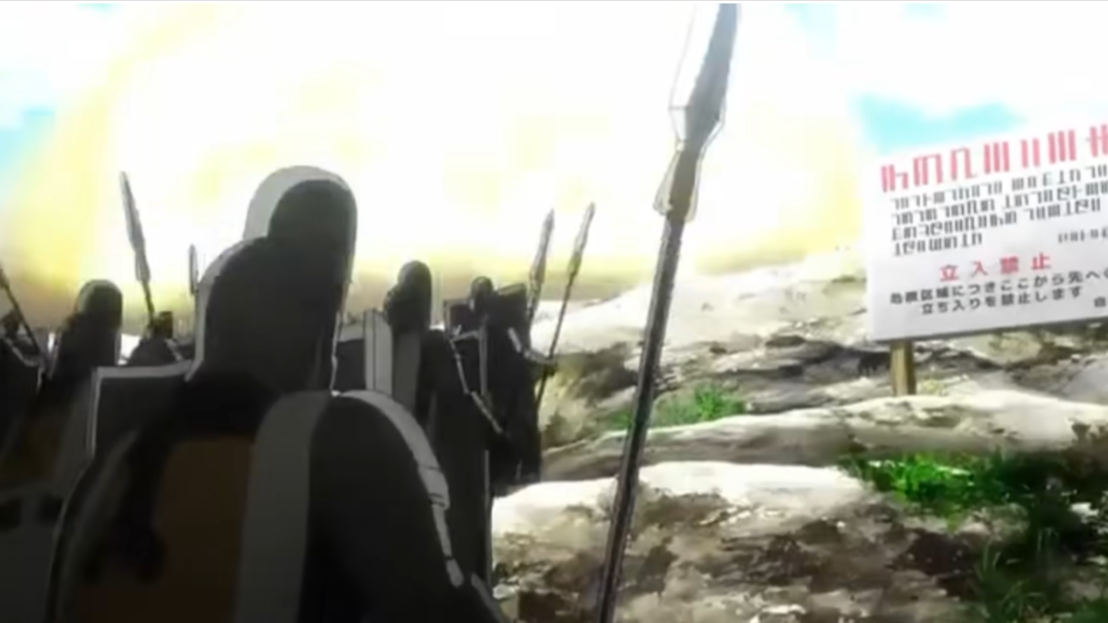
Pre-modern battlefields often function as public markets of honor. Courage is currency. Discipline is visible virtue. Leaders earn legitimacy by presence. A soldier’s identity can be expressed in verbs: stand, charge, rally, break, flee. The culture can judge those verbs.
Indirect fire triggers an inflation event. It floods the moral market with a new reality: personal virtue no longer purchases survival. In fact, the virtues most celebrated can become liabilities. The bold stand up first. They become silhouettes. Silhouettes attract correction. Tight formation signals cohesion. Cohesion becomes a target multiplier.
Modern forces value artillery not solely for killing. They value it for behavior shaping. The core product is not body count. It is decision denial. A barrage can force units into cover, delay movement, break cohesion, disrupt command, and make initiative feel suicidal. If the target believes “motion equals death,” the target becomes governable by fire.
That belief can form rapidly, even if the statistics are less absolute than the mind assumes. Human threat systems prefer false positives to false negatives. A soldier who assumes danger and survives looks “wise.” A soldier who assumes safety and dies disappears. Natural selection writes caution into muscle memory.
Once the belief spreads, secondary effects follow:
People cluster, because isolation feels unsafe. Clustering boosts lethality per shell. People stop maneuvering, because movement feels like a signature. Static posture invites repeat strikes. Leaders become cautious. Caution spreads. Soon the force still exists on paper, yet cannot exploit opportunity.
In medieval moral language, this can look like cowardice. In neurobiological language, it is adaptation. It is the body choosing survival over valor, even if the culture punishes the choice. That mismatch between biology and honor accelerates shame, and shame accelerates collapse of cohesion.
There is a further humiliation: courage becomes a resource you spend while doing nothing. Under indirect fire, bravery is not movement. Bravery is endurance of waiting. You cannot “win” the moment. You can only survive the interval. The barrage steals agency, then forces the victim to experience agency loss as personal failure.
This is also a command problem. Pre-modern command is theatrical and local. Commanders move among troops. Presence motivates. Under modern indirect fire, presence can be a beacon. A commander who behaves like a heroic symbol risks becoming a correction point. The very gestures that anchor morale can attract destruction.
So the old leadership model can become self-destructive. The army must either shift to dispersed, low-signature command or accept rapid decapitation. Either path fractures tradition. If leadership becomes distant, trust suffers. If leadership stays visible, death accelerates. The culture loses a safe option.
That is suppression’s theft again: it steals not only movement, but the cultural scripts that made movement meaningful.
Part 4: Sanctuary Failure and the Collapse of Daily Life
Debates about artillery often focus on lethality. Lethality matters, but it is incomplete. The deeper harm is the death of sanctuary. A population can endure danger if danger is bounded by space and time. A population breaks if danger becomes ambient.
In modern conflicts, humanitarian reporting repeatedly shows this pattern: repeated explosive violence reshapes civilian life by degrading safe routines—sleep, school, clinic visits, market days, transit, harvest windows, and family separation risk. The damage is not only destroyed buildings. It is destroyed predictability. That is the platform daily life stands on.
For a public window into this reality, UN humanitarian updates on Ukraine illustrate the compounding effects of sustained strikes, displacement pressure, and strain on services over long periods. UN humanitarian updates
Health systems add another layer of fragility. Medical care under sustained threat shifts into triage mode. Triage mode is not neutral. It changes survival rates, chronic illness trajectories, disability burden, and mental health load. The WHO’s public work on attacks on health care and emergency response highlights the scale of effort required just to keep essential services functioning. WHO incident monitoring
Translate those real patterns into the Special Region and the consequences intensify. A modern city can reroute clinics, import generators, and staff rotating shifts. A medieval town has fewer substitutes. One burned storehouse is not an inconvenience. It is famine risk. One lost healer is not a staffing gap. It is a community amputation.
Here the economic cruelty becomes visible. A medieval empire spends years turning a child into a knight: food, training, status, horses, armor, rituals, lineage, and the slow social labor of making “courage” believable. Indirect fire does not merely kill that investment. It makes the investment feel absurd. The life that takes a decade to shape can be erased by an industrial component—something produced rapidly, shipped in crates, replaced without memory. Once that ratio becomes visible, people do not only fear death. They fear that life itself has been priced into irrelevance.
Sanctuary failure produces a chain reaction.
First, sanctuaries fail. Walls, temples, basements, gatehouses—spaces that used to mean safety—turn provisional. A stone wall is no longer protection; it is a reference point for correction. A shrine is no longer refuge; it is a recognizable landmark.
Second, sleep fails. People stop resting. They start listening. Listening becomes labor. Labor steals energy that farming, trade, and parenting require. Exhaustion lowers impulse control. Impulse control failure raises violence inside households and units. Domestic conflict becomes a secondary front.
Third, markets fail. Market days depend on confidence in transit. If roads feel targetable, traders reroute or stop. If gathering feels dangerous, people avoid crowds. If stores cannot guarantee supply, prices spike. Price spikes fuel hoarding. Hoarding fuels distrust. Distrust fuels rumor. Rumor becomes a parallel command network.
Fourth, legitimacy fails. In pre-modern governance, protection is a sacred promise. If the state cannot protect sacred sites, cannot protect harvest windows, cannot protect market rhythm, then the state loses more than territory. It loses the claim that it can anchor order.
That is the strategic value of indirect fire beyond body count. It taxes the habits that make an economy function and the stories that make authority believable.
| Feature | The Imperial Investment (Medieval) | The JSDF Input (Modern) |
| Unit of Production | A Knight (Individual Hero) | A 155mm High-Explosive Shell |
| Time to Produce | 15–20 Years (Birth, Training, Lineage) | ~60 Seconds (Automated Factory Line) |
| Cost Basis | Land, Tithes, and Decades of Social Labor | Mass-Production Budget & Logistics |
| Moral Value | High (A Pillar of Society and History) | Disposable (One of Thousands in a Crate) |
| Tactical Exchange | A Duel of Skill and Agency | A Statistical Area Denial |
Part 5: Nervous Systems as Battlefields
Artillery trauma is often misunderstood because trauma gets treated as an emotion. It is closer to an injury pattern. Indirect fire accelerates that injury because it strikes the threat system in a way that is overwhelming and repeatable.
A shell delivers a package: blast pressure, violent sound, ground movement, fragments, dust, structural collapse, and sensory confusion. In environments without industrial noise, the novelty adds intensity. The sky itself seems to scream. The body learns that air can be hostile.
Then the learning does not stop after danger fades. The threat system can remain hyperactive. Sleep degrades. Concentration degrades. Startle response grows hair-trigger. Memory becomes sticky in the worst way. The person becomes a sensor tuned to danger signals, even inside safe rooms.
In modern public health research on prolonged conflict, elevated stress, anxiety, and post-trauma symptoms can persist across large parts of affected populations. The key point is not that every survivor becomes dysfunctional. The key point is that the distribution shifts. That shift becomes a strategic variable.
In a medieval polity, symptom interpretation tends to pass through spiritual categories. Nightmares become curses. Panic becomes possession. Irritability becomes moral failure. That translation does not heal the injury; it often adds shame. Shame then fuels stigma. Stigma isolates. Isolation intensifies symptoms. The injury becomes social.
Inside military units, psychological injury can masquerade as discipline problems. Avoidance can look like cowardice. Hypervigilance can look like aggression. Emotional numbing can look like cruelty. The unit can punish the symptom, thereby worsening the wound.
There is also a timing trap. Physical injuries are obvious. Psychological injuries often manifest later, after the immediate threat. That lag can produce denial. Leaders can declare victory and demand normal performance, while the force quietly loses cognitive bandwidth and emotional stability. Accidents rise. Misjudgments rise. Friendly-fire risk rises. Substance abuse risk rises. Interpersonal violence risk rises.
This is the long tail as a strategic problem. Repeated bombardment exposure increases psychological casualties. Psychological casualties reduce readiness. Reduced readiness extends rotations or thins coverage. Thin coverage raises stress on remaining troops. Rising stress increases mistakes. Mistakes trigger investigation and distrust. Distrust fuels political backlash. Backlash constrains operations. Constrained operations extend conflict duration. Extended conflict increases exposure. The loop does not require the enemy to “win.” The loop manufactures cost.
In the Special Region, the Empire has limited institutional capacity to absorb that cost. It lacks trauma-informed medicine. It lacks mass rehabilitation. It lacks stable welfare systems. It tends to convert suffering into moral judgment. That conversion is politically useful in the short term. It is socially explosive in the long term.
Part 6: Four Political Reflexes Under Illegible Harm
Indirect fire does not only break bodies. It breaks the credibility of interpretation. A regime survives by managing meaning: divine legitimacy, heroic legitimacy, sacred order. If harm arrives in a form the regime cannot narrate convincingly, legitimacy leaks.
Four political reflexes become likely. None require exotic villainy.
Scapegoating. If the state cannot punish the unseen enemy, it punishes visible substitutes. Mages, minorities, foreign merchants, rival nobles, “heretics,” and unlucky commanders become targets. This creates the appearance of action. It also destroys internal cohesion and competence.
Holy rebranding. The regime declares the barrage demonic, a divine trial, or proof that old rituals were insufficient. New rituals appear. New taxes appear. New obedience demands appear. The aim is to regain interpretive monopoly.
Panic centralization. Power flows upward. Local commanders get punished for failure. Decision cycles slow because every actor fears blame. Slow cycles become lethal under modern fires. Lethality then deepens fear, which slows cycles further. The state builds paralysis into itself.
Brutal bargaining. If leaders believe the new terror cannot be resisted, they seek survival through humiliation or collaboration. Collaboration breeds insurgency. Insurgency breeds civil war. The empire can fracture without “formal conquest.”
All four reflexes are psychologically understandable. All four can be strategically fatal. They also interact. Scapegoating fuels holy rebranding. Holy rebranding fuels centralization. Centralization fuels bargaining. Bargaining fuels scapegoating again. The spiral is not random; it is a system seeking narrative control under conditions that deny narrative control.
The cruel detail is that the enemy does not need total destruction to activate this spiral. Limited, repeated shocks can degrade trust faster than decisive battles. Legitimacy is a thin membrane. It tears under constant vibration.
This is also the moment rumor becomes a parallel command network. If official stories fail, unofficial stories compete. Unofficial stories can move faster and feel safer. The state can then lose the ability to coordinate even loyal populations, because trust no longer routes through official channels.
Part 7: Adaptive Empires and the Price of Adaptation
“Medieval” does not mean stupid. It means constrained by institutions, time, and technology. Under pressure, societies adapt. The question is speed and cultural friction.
Against indirect fire, the rational adaptations are structural and often humiliating.
Dispersion. Stop clustering troops. Stop massed camps. Stop tight formations. Spread out. Build small billets. Move in loose packets. Accept that “looking impressive” is now lethal.
Depth. Put command nodes underground. Build layered shelters. Treat stone as roof rather than wall. Create fallback positions. Design redundancy, because predictable hubs invite correction.
Deception. Use decoy camps, false banners, fake fires, dummy wagons, and sacrificial noise. If the enemy’s power depends on observation and timing, poison the observation and waste the timing.
Counter-observation. Deny eyes. Kill scouts. Control ridgelines. Restrict movement in exposed corridors. Guard vantage points. The Empire may not grasp modern sensors, yet it can grasp spotters and signals.
Those adaptations can reduce losses. Yet they carry cultural costs. Pre-modern legitimacy often rests on spectacle: massed armies, visible elites, heroic presence. Dispersion erodes spectacle. Underground command erodes charismatic leadership. Deception erodes honor codes. The empire can survive militarily and still lose identity coherence.
This is the “meaning repair” requirement. If dispersion feels like cowardice, soldiers resist. If digging feels shameful, units avoid it. So institutions rewrite virtue. Stillness becomes discipline. Concealment becomes duty. Building shelters becomes piety. A priesthood can sanctify this. A command hierarchy can enforce it. That is how cultures metabolize new terror.
The Empire can also discover a harsh truth: the most “heroic” behavior can be the most lethal under modern fires. A cavalry charge is not only bravery; it is a signature. A banner is not only pride; it is a marker. The empire can either keep its romance and bleed, or rewrite its romance and endure.
Endurance does not restore the old moral economy. It creates a new one—one that rewards low signature, patience, and risk management. That shift bleeds into civilian life. Villages learn to avoid gatherings. Processions shrink. Festivals become dangerous. Public life becomes muted. A culture becomes quieter, not due to peace, but due to fear of attention.
Part 8: Physics as a Rival Priesthood
Indirect fire creates a new priesthood even if nobody intends it. In a world ruled by omens, the person able to predict danger becomes sacred by function. Authority shifts toward prediction and prevention.
In the older order, legitimacy flows from interpretation: gods, taboos, heroic lineage, sacred doctrine. In the newer order, legitimacy flows from risk management: spacing, shelter, timing, and the discipline of low signature. The people able to say “do not gather at dawn” and be proven right will outcompete the people able to say “the gods are angry” and offer no protection.
This does not erase religion. It changes religion’s bargaining power. It shifts sacred weight away from symbolic explanation and toward practical survival. A world can still pray, yet it also learns to schedule and disperse. The prayer becomes private; the drill becomes public.
That is the deepest civilizational shift hiding inside artillery. A society learns that the sky can be scheduled. Not begged. Not bribed. Scheduled.
Even if the JSDF leaves. Even if the Gate closes. Even if the Empire “wins” in the story. The shelter culture remains. The dispersion habits remain. The politics of fear remains. A society that has learned the air can deliver repeatable harm never fully returns to a world in which suffering must have an author you can face.
Yet treating this as a one-sided transformation is a mistake. Meaning does not only break on the receiving end. It erodes at the source as well. The same procedure that turns terrain into geometry can turn the soldier into a function. Once a force learns to solve human problems by deleting coordinates, a quieter question rises: what kind of people does that make us?
To keep one reference point in view, the official series hub is here: Official anime site
For a public snapshot of industrial artillery as a system, not a miracle, this NATO procurement announcement is a useful anchor: NATO procurement announcement
Part 9: The Burden of the Faceless God
Picture the same moment from two temperatures. An imperial soldier is face-down in wet earth, biting mud, trying not to breathe too loudly because breathing feels like movement and movement feels like death. Far away, a JSDF crew stands in cooled air, reading grids and corrections, watching a clean interface turn terrain into points. The grotesque truth of modern war is not only the power gap. It is the emotional climate gap. Death arrives hot and intimate for one side, and cold and procedural for the other.
Indirect fire does not only shatter the mind of the person under it. It quietly corrodes the humanity of the people who deliver it.
Most JSDF personnel come from a liberal democratic society that trains them to regard life as weighty—legally, morally, politically. They are not raised as ritual executioners. Yet artillery demands a rhythm of killing that feels less like heroism and more like sanitation. You do not see the eyes of the people you erase. You do not hear their voices. You do not smell the blood. You remove a problem from a map and wait for the next problem to appear.
In the short term, that distance can reduce guilt. In the long term, it can produce a different injury: ethical dissociation. If the enemy is only a coordinate, the act can feel like maintenance rather than violence. Maintenance language protects the mind. It also dissolves the moral friction that keeps a person human.
This is the executor’s trauma in its modern form. Not the memory of a face you cannot forget, but the memory of having no face at all. A blank space in the mind, a missing anchor. Many people imagine soldiers are haunted by sights. Many are haunted by the absence of sight, and by the ease that absence created.
Then comes the asymmetry curse. A medieval opponent may carry a cheap spear and a prayer. The JSDF brings supply chains, factories, precision, and repeatable terror. Even if every fire mission is tactically justified, the imbalance can still rot the taste of victory. It does not feel like winning. It can feel like crushing. The self-image of a “defensive force” strains under the weight of becoming an environmental disaster—an earthquake with a flag attached.
That strain matters because institutions survive on identity. Soldiers do not only need orders. They need a story about the self. In a conventional battle, the story can be “we fought.” Under industrial indirect fire, the story threatens to become “we processed.” The gun line becomes a workplace. The battlefield becomes output. Casualties become results. The language turns clinical, and clinical language is a shield against meaning.
The postwar illness is the cruel symmetry. Imperial survivors jump at thunder, at dropped objects, at slammed doors. JSDF personnel may not jump at noise in the same way—yet they can be stalked by emptiness. By the sense that something enormous moved through them, yet never fully reached their senses. The body can store stress even if the mind stayed behind glass. The conscience can store action even if the heart stayed numb.
That is the final circuit of meaning deprivation. The Empire loses the capacity to interpret suffering as a moral drama. The JSDF risks losing the capacity to interpret itself as a moral agent. One side is pushed toward superstition, scapegoating, and panic. The other is tempted by detachment, routine, and professional numbness. Both are exit ramps away from full humanity.
The bleak lesson is not simply that modern weapons win. It is that modern procedure can hollow everyone trapped inside it. The Empire is culturally castrated—forced to accept that the world can kill by schedule rather than by judgment. The JSDF can win the fight, yet still bleed a quieter loss: erosion of identity, and the fear that they have become closer to a task than a person.
If this essay hit you hard, share it with a single question: a society can fear death without a face, but can a soldier endure killing without a face?
For ongoing public reporting on civilian harm and displacement patterns in a modern high-intensity war, this OHCHR reporting hub is a strong starting point: OHCHR reports
©柳内たくみ・アルファポリス/ゲート製作委員会
© Takumi Yanai / AlphaPolis / GATE Project


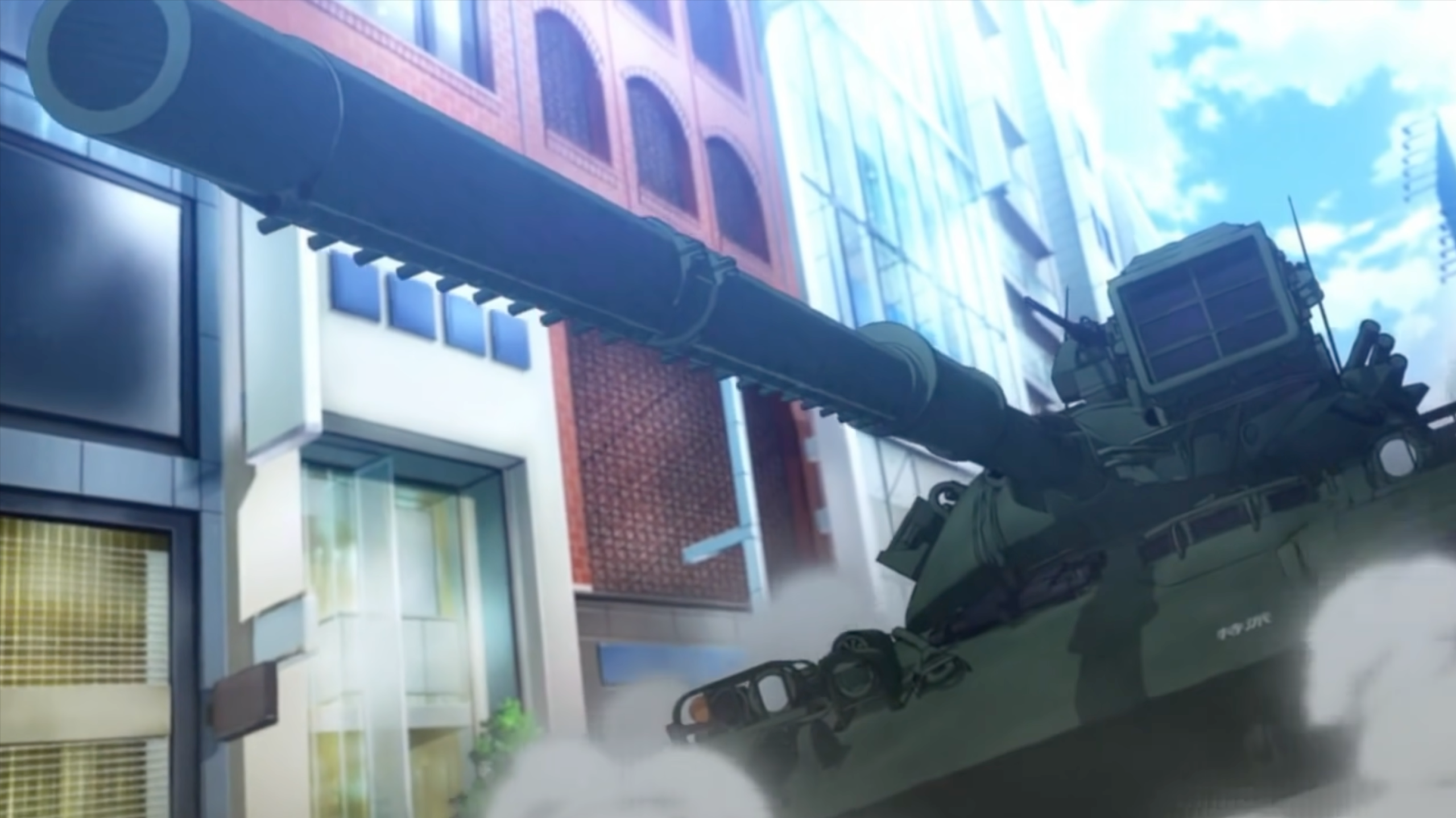


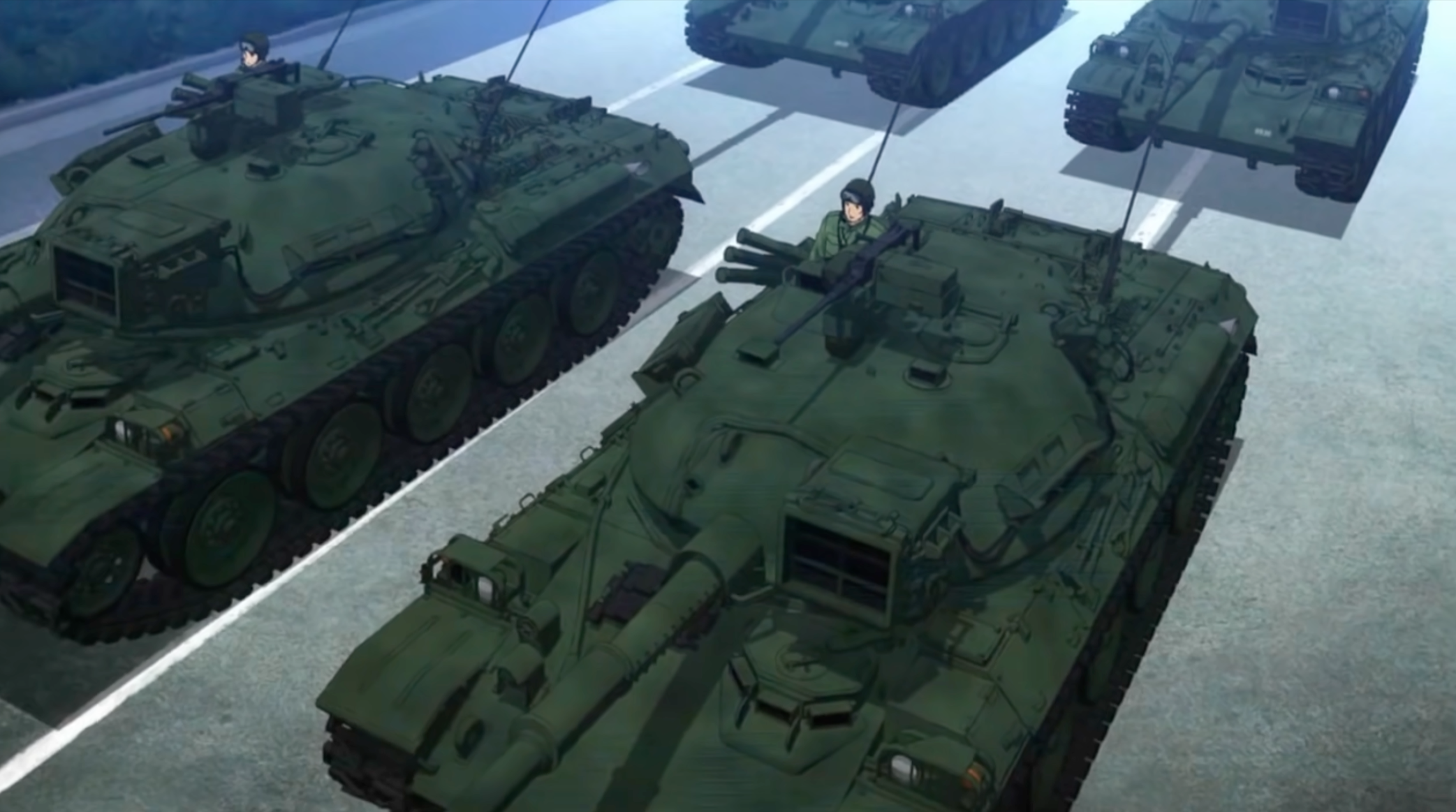
Addendum: The Price of Survival
The analysis above focuses on the immediate cultural rupture, but to truly close the loop on the Empire’s fate, we must address the “aftershocks” of adaptation.
1. The Paradox of Adaptation: Survival as Self-Destruction
Critics may suggest the Empire will simply adapt—dispersing forces and burrowing into the earth. But this is the final, cruelest theft. To survive indirect fire, the Knight must abandon the Theater of Valor and embrace the “Tactic of the Rat.” They must hide, scatter, and flee from the very sky they once worshiped. In doing so, the Empire survives physically but perishes culturally. Their identity as a heroic elite is liquidated by the necessity of survival; they become a force of survivors without a soul.
2. The Asymmetry of “Expendables”
We must confront the horrifying economic reality of this collision. To the JSDF, a shell is a mass-produced industrial consumable—a line item in a budget. To the Empire, a veteran knight is the result of twenty years of social investment, lineage, and ritual. When a single fuse erases a decade of human excellence in a fraction of a second, it isn’t just a kill; it is the absolute devaluation of human life. This is the ultimate “Hyperinflation of Death,” where the enemy’s most precious resource is spent against our most trivial logistical byproduct.
3. The Long-Term Suppression of Peace
The suppression does not end when the guns fall silent. The trauma of “faceless death” remains embedded in the collective psyche. This lingering fear creates a vacuum of legitimacy that only the “protector”—the JSDF—can fill. The Empire’s citizens, broken by the memory of the sky screaming, will eventually trade their sovereignty for the promise of safety. This is the “Soft Suppression”: a peace born not from mutual respect, but from the realization that one side owns the math of survival, and the other can only pray it isn’t the target.