


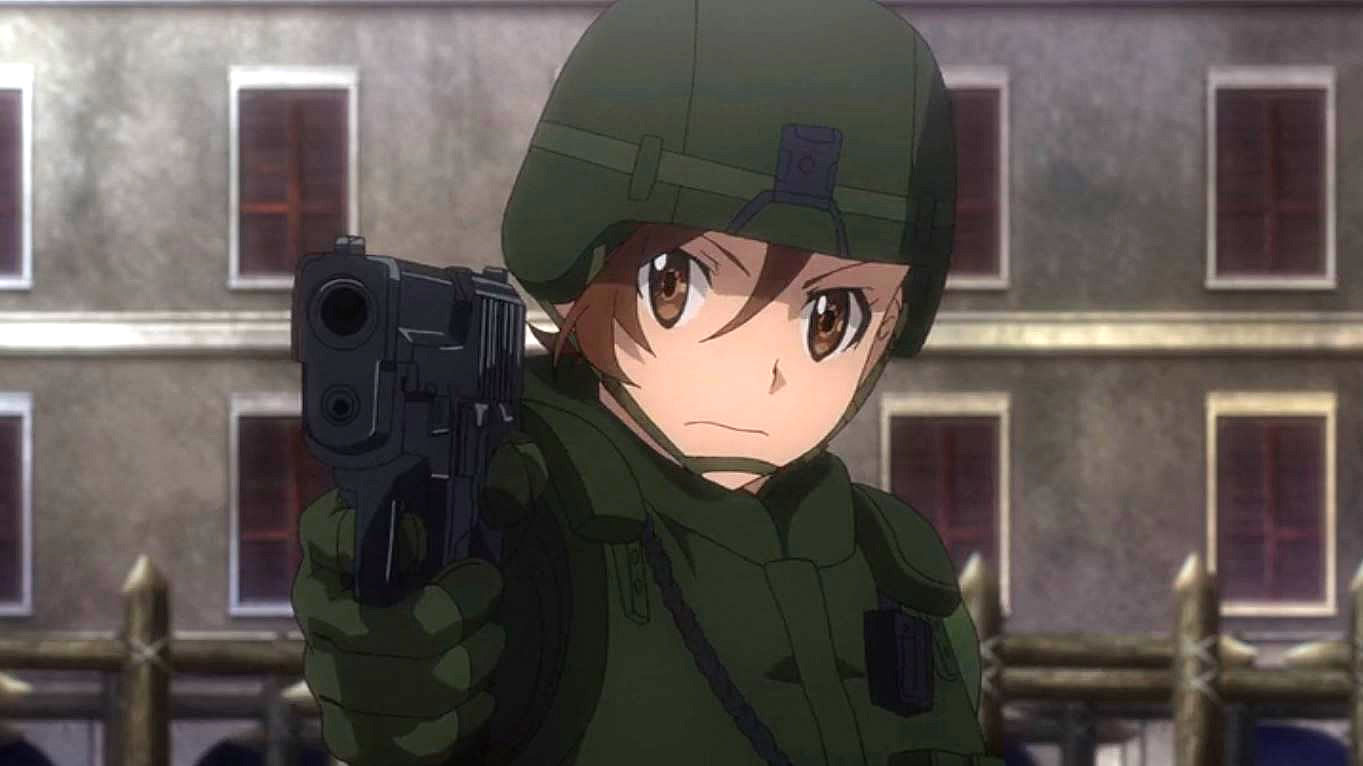
Mina Kuribayashi (Shino Kuribayashi / 栗林志乃) is one of those characters you can’t “just like casually.” She’s loud. She’s proud. She’s volatile. She’s the kind of teammate who can turn a quiet patrol into a bar fight with the universe. And somehow, in a story built on modern firepower, helicopters, and politics, she becomes the most human way GATE delivers violence: not as a system, but as a pulse.
This draft is built on a hard premise: Kuribayashi’s close combat is not “realistic” in the strict sense. In modern military logic, entering melee range voluntarily is usually either a mistake or a desperate last resort. If we praise her melee as “believable” without acknowledging that, we fall into survival bias—she feels convincing because she survives long enough for the story to keep proving she’s convincing.
So this piece flips the lens. Instead of asking “How can she win up close?”, we ask: “Why does she survive situations where she should statistically get punished?” And then we go one step deeper: “What does the show do—structurally, politically, emotionally—to make her survival feel coherent?”
Because here’s the truth that makes Kuribayashi special: she isn’t just a strong character inside GATE. She’s a central tool the series uses to keep its entire premise from becoming sterile. When tanks and doctrine are the headline, she is the skin. When politics becomes a chessboard, she becomes a fist on the table. When the ‘JSDF vs fantasy’ hook risks turning into an essay, she turns it into a heartbeat.
If you want official series context before we get clinical, start here: Official site.
Kuribayashi’s Place in the Unit: Why “NCO Energy” Matters
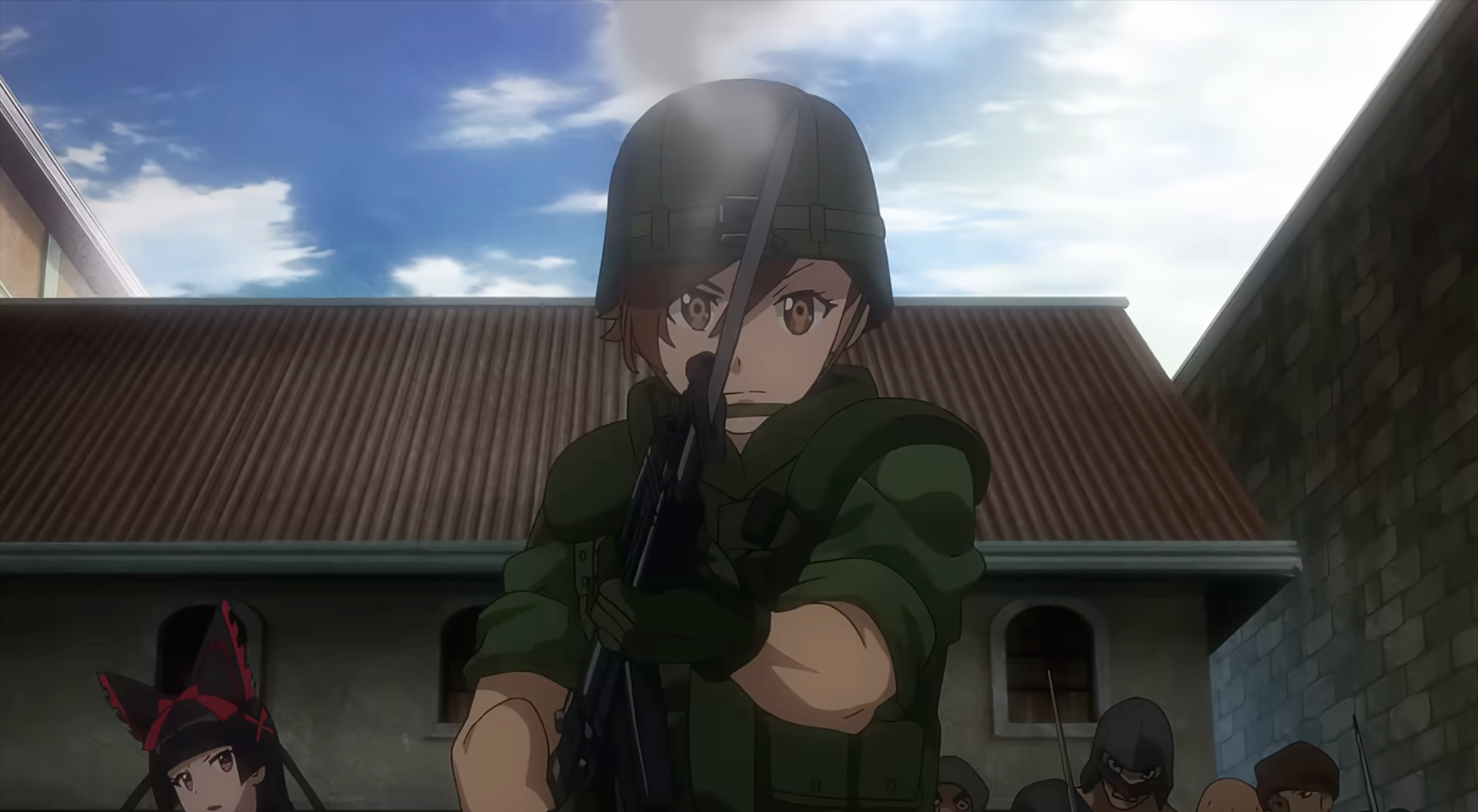
In the story framework, Kuribayashi operates as part of Itami’s Third Recon Team. Many fan-facing summaries describe her as an NCO (non-commissioned officer) within the JSDF. Some sources label her “Sergeant First Class,” while Japanese community references sometimes present a different specific grade. Rather than pretending the internet has a single clean answer, the safest and most meaningful anchor is this: the narrative treats her as a “曹” type—an NCO-tier figure who is not a commander on paper, but who is constantly shaping the fight on the ground.
That matters because “NCO energy” is exactly what Kuribayashi brings to GATE. She doesn’t read like a distant strategist. She reads like the person who makes the plan actually happen—or makes the plan collapse if her temperament catches fire.
Japan’s Ministry of Defense describes the “曹” category as personnel who hold specialized skills, directly guide enlisted members (“士”), and support commissioned officers (“幹部”). That’s the real-world texture behind why Kuribayashi feels like an engine, not a decoration. She’s the kind of person who, in a believable unit, would be both valuable and carefully managed. JSDF rank overview
And that’s where the character writing becomes spicy: Kuribayashi often behaves like a controlled burn that is always one gust away from becoming a wildfire. You don’t watch her because she’s “correct.” You watch her because she might be the spark that saves you—or the spark that burns the mission.
Recon Work Isn’t Glamour: It’s Information, Pressure, and Bad Options
If we want to discuss Kuribayashi honestly, we have to respect what “recon” implies in real life. Recon isn’t just sneaking around heroically. It’s being sent forward into uncertainty so someone else can make decisions with better data. It’s living inside the part of the map where the rules are least stable.
A JSDF-focused explainer on reconnaissance frames the role as moving ahead of the main force to survey terrain and enemy conditions, report back, and provide information that supports commanders’ decisions. It also notes that reconnaissance can be covert, but it can also be “forceful,” provoking reaction to confirm enemy presence, and that mobility and route selection can matter as much as pure fighting. Recon mission overview
This is important because it gives us a more grounded way to understand why melee happens around Kuribayashi at all.
Modern forces don’t “choose” melee because it’s cool. They end up there because distance collapses. Recon is one of the job types where distance collapses more easily: narrow routes, crowds, poor visibility, sudden contact, and political consequences. Even when you’re disciplined, you sometimes get shoved into the worst range by the shape of the world.
So if Kuribayashi is the character most associated with close-range violence, one interpretation is not “she loves punching.” It’s “the story keeps using her to embody what happens when recon pressure compresses modern advantage into messy proximity.”
The Real Trick: Her Close Combat Starts Before Contact
Kuribayashi’s most convincing moments don’t come from elegant technique. They come from decision speed.
This is where earlier analysis often gets lazy. People say she’s “skilled.” People say she’s “trained.” People say she’s “built different.” But what you actually see, in the scenes that feel most coherent, is a pattern: she commits before the opponent finishes understanding what kind of fight this is.
That pattern is not automatically “good soldiering.” Sometimes it’s closer to recklessness. But it is a consistent character logic—one that GATE repeatedly rewards.
And that’s the first major correction we need to make from the typical fan praise: Kuribayashi’s temperament is not a superpower. It is a liability that becomes an advantage only under specific conditions. The show’s job is to keep those conditions showing up often enough that the audience accepts the bargain.
Survival Bias: The Most Dangerous Compliment We Give Her
“She feels believable” can become a trap phrase.
Because the biggest reason she feels believable is also the biggest reason she is dangerous as a “realism example”: she survives.
In reality, a small fighter who repeatedly chooses proximity against blades, armor, or multiple opponents is playing with statistics. Even if you’re strong, even if you’re trained, even if you’re brave, the world has too many variables. You don’t get to be heroic in every variable at once.
So this article treats believability as something different from accuracy.
Accuracy is: “Would this happen as shown?”
Believability is: “Does this feel coherent inside a stable set of rules?”
GATE aims for believability, not strict accuracy. Kuribayashi is one of its main believability engines.
Where Her “Believability” Actually Comes From: Asymmetry, Not Muscle
Let’s be blunt about the physical problem. Kuribayashi is often portrayed as petite. If the opponent is a heavy armored knight, mass and leverage are terrifying. Boots and gloves don’t erase that. And if the fight becomes a prolonged grapple with a bigger body, the math becomes cruel fast.
So if her wins feel coherent, it’s usually because the encounter is asymmetrical—rules, goals, and expectations are not shared.
Kuribayashi rarely needs to “win a duel.” She needs to end a problem quickly, regain distance, and return to modern advantage. That turns melee into a bridge, not a destination. It becomes a brutal shortcut to re-enter the domain where her side dominates.
Asymmetry looks like this:
- The opponent assumes ritual or honor; she assumes survival and speed.
- The opponent expects a clean exchange; she expects a short, ugly finish.
When those assumptions collide, the person breaking the shared script looks terrifying. Kuribayashi feels believable because she breaks the fantasy script early and often.
The Tactical Mistakes That Should Get Her Killed
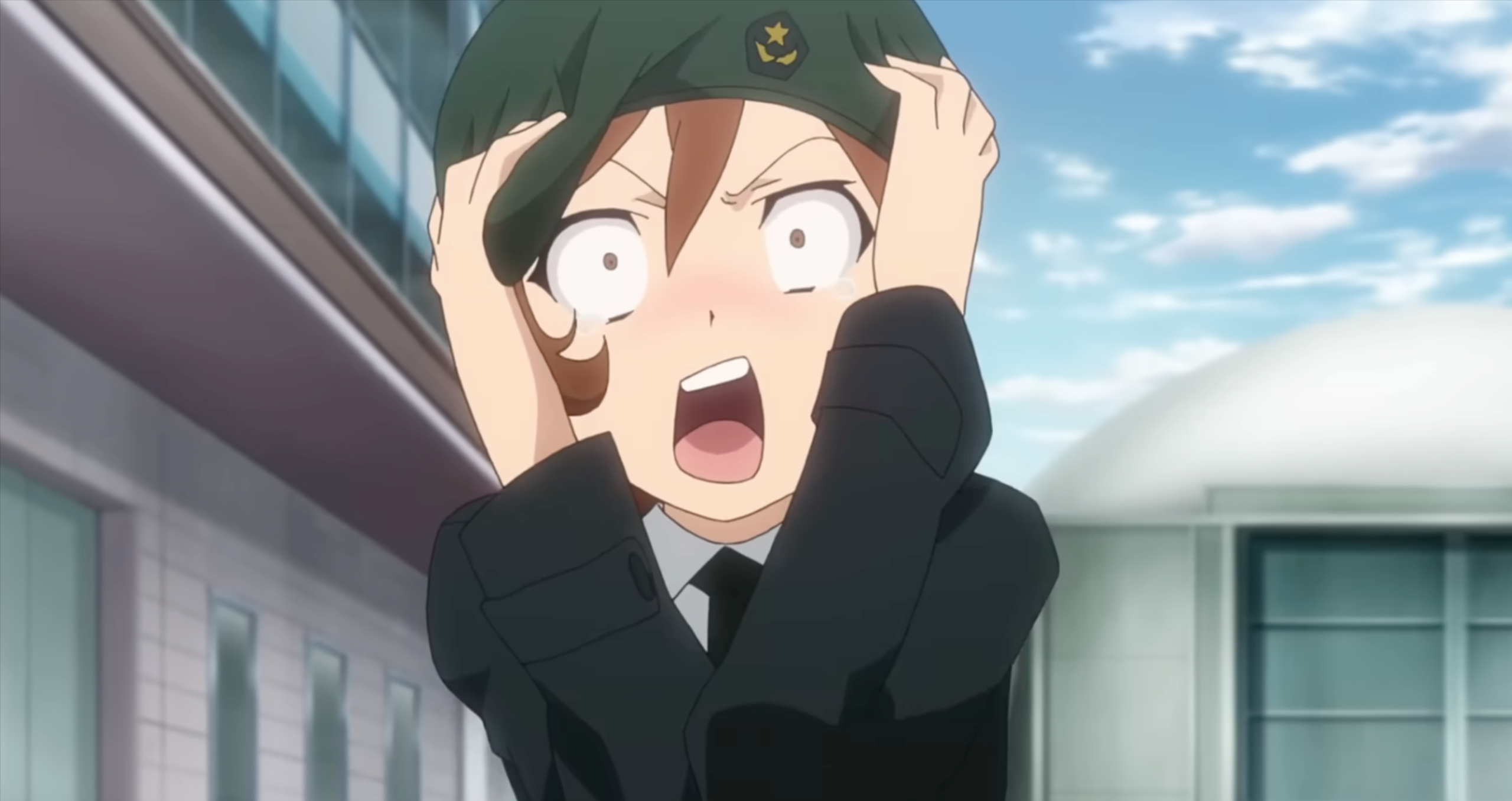
Now we do the forensic version. We name the “death doors”—choices that, in real close-range violence, can end you quickly. Then we ask how GATE keeps those doors from slamming shut.
We’re not going to soften this for comfort. We’re going to sharpen it—then we’ll let affection return later, not as denial, but as understanding.
Death Door One: Choosing Contact When Distance Is Available
In modern logic, distance is a resource. If you can keep it, you keep it. Choosing proximity when you don’t have to is usually a self-inflicted loss of advantage.
It starts as a tiny mistake. One step too far. One doorway taken without checking the far corner. And then it becomes physical: your heartbeat jumps, your mouth dries out, and the world suddenly feels too close—like the air itself has weight.
GATE keeps Kuribayashi alive here by compressing the environment until “just keep distance” becomes expensive or impossible. Crowds, corridors, surprise contact, political optics, capture requirements—these are story tools that force “local solutions” instead of “clean gun solutions.” Recon as a narrative context makes those compressions feel less random.
If you want this to feel even stronger on screen, the most effective micro-fix is simple: show her trying to avoid contact once. One angle change. One restraint. One half-second of “not yet.” Then let the world collapse anyway. Now her rush looks like reluctant necessity, not preference.
Death Door Two: Entering the Blade’s Range Without a Clean Entry
Against a competent blade user, the worst place to be is the place their weapon wants you to be. If you enter that space without a plan, you get cut. And cuts don’t have to be dramatic to be decisive. A shallow line across a forearm can turn your hand into a useless claw.
The fear isn’t the movie-style stab. It’s the quiet, sudden warmth you feel before pain catches up—then the panic when you realize your grip is slipping and your body is no longer cooperating on schedule.
GATE frequently protects Kuribayashi by making fantasy opponents “script-bound”: large movements, visible posturing, confidence that slows adaptation. That buys her timing she wouldn’t get against a predator-minded enemy who fights like survival depends on it.
To sharpen this, the story needs to show why the entry exists. A slip. A snag. A distraction. Or the most honest option: the opponent makes a mistake because they have never fought someone who refuses the duel script. That can be believable—if the opponent learns later.
Death Door Three: Getting Trapped in a Real Grapple Against a Bigger Body
This is where physics stops negotiating. If a heavier opponent gets stable control of your center—hips, torso, posture—and you cannot disengage, the fight becomes a fatigue machine. Speed matters less. Skill still matters, but the margin shrinks. Endurance starts eating your options.
It doesn’t feel like a “fight” anymore. It feels like being pinned under a moving wall. Your ribs creak when you try to inhale. Your neck burns as your posture folds. The world narrows to pressure, heat, and the ugly realization that you can’t create space with willpower.
GATE often avoids this danger by keeping Kuribayashi’s close-range encounters short. The fight ends before the “mass advantage clock” fully runs. That’s not a flaw by itself; it’s an artistic decision. But it is part of why she feels “believable” while also being protected from the ugliest realistic consequences.
If you want a single change that would upgrade her credibility without killing her aura, it’s this: let her get stuck once. Not for long. Just long enough to show panic flicker—vision tunneling, breath turning sharp, weapon control threatened—then she escapes using something procedural and brutal. Once the audience sees that danger is real, every later win feels earned.
Death Door Four: Losing Weapon Control
In modern soldiering, the weapon is more than a tool. It is identity and safety. In close range, a fight can become a fight over your weapon. If you lose that fight, you don’t simply lose—you may be killed with your own equipment.
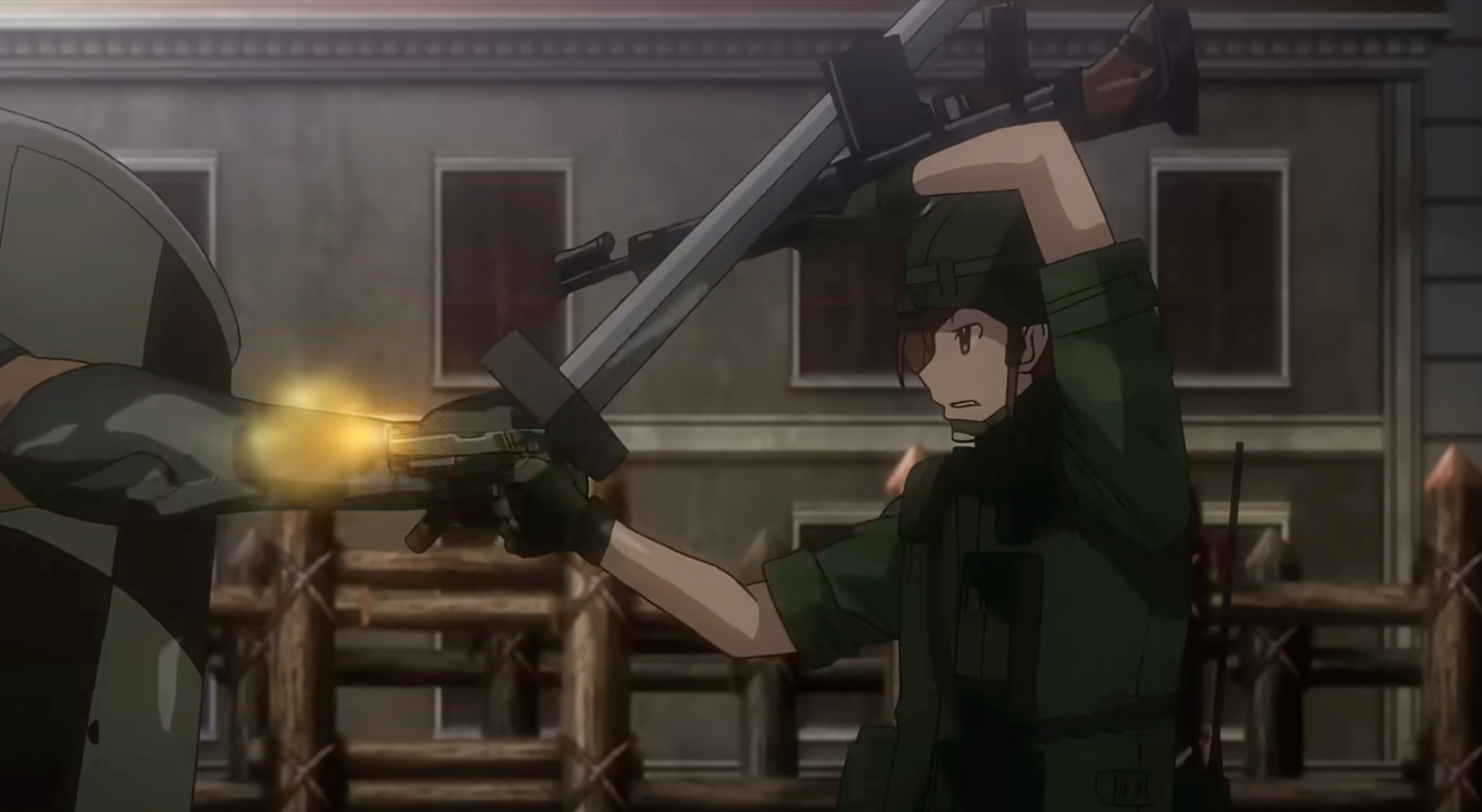
It’s a special kind of terror when someone’s fingers clamp onto your rifle and it suddenly stops being yours. The sling bites into your shoulder. Your wrists spike with pain as the barrel gets yanked off-line. For a half-second, you can feel your own gear turning into a handle for the other person.
The show tends to de-emphasize weapon retention as a lingering crisis. When it appears, it resolves quickly or gets interrupted. That is one of the quietest narrative assists Kuribayashi receives.
A small fix would do huge work: show one messy retention beat that lasts a breath longer. A hand on the rifle. A moment of alarm. Then a dirty solution—stomp, shove, headbutt, wall impact—followed by immediate disengagement. It wouldn’t need to be instructional. It would just need to acknowledge reality.
Death Door Five: Treating Multiple Opponents Like a Line Instead of a Swarm
Multiple attackers change everything. You don’t “trade.” You route. You move through hazards. If you fixate on one person, the blindside arrives.
The first grab doesn’t hurt. The second one does. Cloth twists at your shoulder, a forearm clamps your throat, and suddenly your feet aren’t where you thought they were. Sound turns into a muffled roar. You realize the real enemy isn’t any single face—it’s the lack of space.
Fantasy troops in many stories behave like turn-based extras. When that happens, Kuribayashi looks invincible. When they behave like a swarm—grab, pin, collapse lanes—she should be forced into terrain solutions: doorway funnels, elevation changes, hard corners.
If GATE ever wanted to harden Kuribayashi without reducing her popularity, it could let enemies behave like a group one time. Not to humiliate her, but to make her adapt. Adaptation is the most respectful kind of power-up.
Death Door Six: Never Paying the Fatigue Tax
Real close-range fighting is exhausting in seconds. Fine motor control collapses. Breath becomes urgent. Decision speed slows. If a character chains multiple close-range wins without showing fatigue, the audience starts feeling “superpower” even if no superpowers exist.
It’s the tiny failures that betray you first: fingers that won’t close all the way, a stumble you can’t explain, saliva tasting like metal. Your lungs stop feeling like air-bags and start feeling like burning paper. And that’s when you make the mistake you swore you’d never make.
Anime pacing often skips that cost. But the fix is almost free: one heavy breath, one shaky hand, one delayed reaction. Those tiny cues increase perceived realism more than any fancy technique callout.
So Why Do We Still Love Watching Her?
Here’s where affection returns—without pretending she’s a perfect tactical role model.
Kuribayashi is addictive because she is the character who drags modern violence down into the human realm. She makes the JSDF side feel like people, not just doctrine. She brings appetite—sometimes ugly appetite—and that appetite gives the world texture.
In a show that can lean into politics, diplomacy, and spectacle, she is a blunt instrument that reminds you what is actually at stake: bodies, fear, impulse, consequence. If the story were only about technology, it would eventually feel like a lecture. Kuribayashi makes it feel like a living room argument that escalates into a door slammed so hard the whole house shakes.
And she’s not written as a calm saint. She’s written as a bundle of contradictions that feels embarrassingly alive. That’s why fans argue about her. That’s why she sticks.
Recon Pressure Explains Why She Ends Up in the Worst Range
Now we connect her character to the real-world mission logic again.
Recon, by definition, lives close to uncertainty. You move ahead of the main force. You gather information that removes “fog” from decisions. You sometimes do it covertly; sometimes you do it forcefully, provoking reaction to confirm presence. That’s not cinematic fantasy—it’s an operational reality described in JSDF-oriented explanations of reconnaissance. Recon mission overview
When the story places Kuribayashi in recon contexts, it gains a plausible excuse for compressed danger. She isn’t always charging into melee for fun. Often, she’s the embodiment of what happens when the mission puts you too close, too fast, with too many constraints.
That doesn’t excuse every scene. But it creates a baseline where “the worst range appears” feels less like pure convenience.
What a “曹” Figure Adds to the Fantasy: Ground-Level Authority and Ground-Level Risk
Kuribayashi’s NCO framing matters for storytelling even more than for trivia.
In a believable unit, NCOs are the ones who translate intent into action. They shape discipline day-to-day. They teach, correct, and stabilize. Japan’s Ministry of Defense describes “曹” as those who directly guide “士” and support “幹部.” JSDF rank overview
So when Kuribayashi acts on impulse, it hits harder. An impulsive private is one thing. An impulsive NCO-tier figure is a leadership problem—and that makes her more interesting, not less. It’s a character tension with actual moral weight: her bravery can protect people, but her aggression can also endanger them.
That tension is exactly what makes her feel like she belongs in this premise. She’s not a mascot. She’s a risk you can’t stop watching.
The Cleanest Explanation for Her “Believability”: Consistency, Not Accuracy
Kuribayashi’s close combat doesn’t feel coherent because it matches a real-world training syllabus frame by frame. It feels coherent because GATE repeats a stable pattern:
- Compression forces proximity.
- She commits fast and breaks the fantasy script.
The fights stay short enough that the heaviest realistic consequences—mass dominance, prolonged fatigue collapse, weapon retention chaos—don’t fully take over.
That isn’t “lying.” It’s genre design. The show wants modernity to feel overwhelming without turning every encounter into one-sided slaughter. Kuribayashi’s close-range moments let the series deliver tension and catharsis inside a world where guns would otherwise end scenes too quickly.
In other words: her “believability” is a crafted feeling. It’s earned through repetition, rhythm, and constraint—not through literal accuracy.
The Reverse Test: When Would She Finally Lose?
If we want to honor both realism and love, we should be willing to imagine her losing in a way that respects her character rather than cheapening it.
The most believable loss scenario is not “a stronger enemy.” It is an enemy who learns—combined with an environment that prevents distance recovery.
Picture it.
Kuribayashi enters a tight space where retreat lanes are limited. The opponent has seen her fight before and refuses to posture. They don’t swing big and reset; they collapse. One attacker reaches for weapon control. Another targets her hips and posture. A third blocks the exit lane. Kuribayashi commits forward anyway, because she always wants to end contact quickly—and that forward commitment becomes the trap. Now her temperament is scouted and punished.
That’s not “she’s weak.” That’s “her pattern became readable.” And the most respectful growth after that loss wouldn’t be “she punches harder.” It would be “she changes her decision timing.”
That’s the kind of evolution that would make her even more beloved: a character who survives, then learns how not to rely on luck disguised as courage.
Why She’s the Heart of What the Anime Shows
Some characters exist to represent a theme. Kuribayashi exists to represent a sensation.
She represents the sensation of modern violence becoming personal. She is the point where doctrine meets ego, where procedure meets impulse, where “the JSDF” stops being an institution and becomes a person you can argue with, laugh at, fear, and—against your better judgment—root for.
And because she is not clean, the show around her feels less clean. That’s good. GATE is not at its best when it’s presenting perfect chess moves. It’s at its best when the collision of worlds produces emotional mess: jealousy, pride, anger, loyalty, sudden tenderness, sudden brutality.
Kuribayashi carries that mess. She carries it in her face and her body language. She carries it in the way she refuses to be small, even when the world reminds her she is. She carries it in the way she looks like she could either save you or start a fight that ruins the mission.
That’s the paradox that makes her feel alive.
Where to Go Next If You Want the Sharper Version Without Losing the Soul
If we expand this into a longer feature, the best way to increase both realism and drama is to add three stress-test arcs that keep the heart intact.
First, a weapon-control crisis that lasts more than one cut. Not to weaken her, but to prove she can solve it.
Second, a swarm moment where terrain is her only honest escape. Let her win by routing, not by dominating.
Third, an enemy who learns. The first fight is her script-breaking victory. The second fight is her humility. The third fight is her adaptation.
That structure would upgrade her from “cool” to “legend,” because it would give her growth that matches the reality implied by her role: a ground-level professional who survives, pays costs, and gets smarter.
If you want official show context again before closing the tab, here’s the Official site.
And if you want the real-world framing for what “曹” signifies in the JSDF hierarchy, the Ministry of Defense overview is the cleanest baseline: JSDF rank overview.
Kuribayashi doesn’t have to be a perfect tactical example to be the show’s core. In fact, she becomes the core precisely because she isn’t perfect. She is the character who turns the premise into something you can feel in your chest. She is the heat that makes the metal glow.
©柳内たくみ・アルファポリス/ゲート製作委員会


One unexpected rabbit hole while researching this article was JSDF ranks—and how slippery they can become in English. The domestic system is clear, but once it crosses languages, different writers reach for different “nearest equivalents.” You’ll see U.S.-style labels, NATO-flavored terms, and fan shorthand all used for the same Japanese ranks, depending on the source.
Kuribayashi’s rank was a perfect example of that translation drift. While gathering material, I ran into multiple references that didn’t fully agree—some listing one specific NCO grade, others suggesting another, and some staying vague. Rather than forcing a single “definitive” answer where public-facing info isn’t perfectly consistent, I treated her the way the show treats her: as an NCO-tier presence, a ground-level operator who shapes what happens when plans collide with reality.
Also, confession time. This ended up being a very essence-first insight piece—more about why her close combat works for the anime than about checklist realism. But the side effect was real: the more I collected scenes, notes, and context, the more my affection for Kuribayashi grew. She’s now my second-favorite character in GATE. (Yes, Rory is still #1. Always.)
That research spiral is also why there are more images than usual. I kept finding moments that supported the argument in one glance—professional focus, distance collapse, weapon-control panic, the “this is getting too close” reality that the series nails when it wants to.
I wrote a lot of words above, but I’ll end this simply: GATE isn’t GATE without Kuribayashi’s close combat. Whatever you think of the tactics, her presence is part of the show’s core identity—and that’s a fact I don’t think will ever wobble.
I keep thinking about one tiny moment in the Italica defense—blink and you miss it—when the fight collapses into true melee and a bayonet gets damaged.
In most anime, that would just be “cool choreography.” In a real JSDF context, it’s closer to a reportable incident. A bayonet isn’t a disposable prop. It’s controlled equipment. It’s inspected, accounted for, and treated as part of a system where “small” damage can signal bigger failures: unsafe handling, loss of control under stress, or sloppy post-action checks. Break it in the field and you don’t just lose a tool—you create paperwork, accountability, and a chain of questions that can turn from awkward to serious fast.
What’s fascinating is that GATE almost acknowledges this. Not fully, not in a documentary way, but you can feel the series briefly brushing against a reality most fiction ignores: modern military strength isn’t just firepower. It’s management. It’s routine. It’s the unsexy discipline of making sure every piece of gear is where it’s supposed to be, in working condition, before the next contact happens.
And that’s the thread I want to pull next.
At some point, I’d love to write a dedicated insight piece on how GATE would look if we focused on the JSDF’s very specific culture of equipment accountability—weapon control, serial-number reality, inspections, maintenance cycles, and what “damage” means beyond the immediate scene. Because once you start taking that seriously, the story opens into a different kind of tension: not “can we win the battle,” but “can we sustain the operation.”
Who replaces a damaged bayonet in the Special Region?
What does repair even mean when your supply chain crosses a Gate?
How do you handle parts, lubricants, magazines, optics, batteries, and cleaning kits when you’re operating in a world that can’t manufacture your standards?
How does “one broken piece of kit” ripple through readiness, discipline, and trust?
That’s where GATE gets quietly terrifying—not in the fantasy violence, but in the reality that victory has a maintenance schedule.
I wrote a lot about Kuribayashi’s close combat in the main article, but moments like the Italica bayonet damage are why she matters even more to me now. She’s the character who forces the show into the range where gear stops being “equipment” and becomes “the thing that saves you or fails you.” Her melee isn’t just spectacle. It’s the stress test that reveals what the series usually keeps off-camera: the cost, the friction, and the discipline that modern power depends on.
If you’re interested in the “unseen backbone” of GATE—the logistics, sustainment, and weapon-management reality the anime only hints at—stay tuned. I’m collecting material, and honestly? The deeper I dig, the more I realize GATE has a whole second story hiding under the action.